
info@seagull-health.com
SeagullHealth
语言:
search
new
Side effects and special population use of Cobimetinib
509
Article source: Seagull Pharmacy
Nov 05, 2026

Cobimetinib can cause multisystem adverse reactions, and medication use in special populations also requires differentiated management. Identifying risks and standardizing monitoring are the core of safe medication use.

I. Main Adverse Reactions and Management

New primary malignancies: Cutaneous and non-cutaneous new primary tumors can occur. Dermatologic monitoring is required before treatment, during treatment, and for 6 months after the last dose; suspected skin lesions should undergo excision and pathologic evaluation. This risk itself does not require dose adjustment.

Hemorrhage: Major hemorrhagic events can occur. Closely monitor for signs of bleeding; for grade 3 hemorrhage, withhold treatment for up to 4 weeks and resume at a reduced dose after improvement; permanently discontinue for grade 4 hemorrhage or if no improvement within 4 weeks.

Cardiomyopathy: Manifested as decreased left ventricular ejection fraction (LVEF). Assess LVEF before treatment, 1 month after initiation, and every 3 months thereafter; for asymptomatic or symptomatic LVEF decline, withhold, reduce the dose, or permanently discontinue according to severity.

Severe skin reactions: Severe rash can occur. For intolerable grade 2, grade 3, or grade 4 rash, withhold or reduce the dose, and discontinue if necessary.

Serous retinopathy and retinal vein occlusion: Perform regular ophthalmologic examinations and evaluate promptly for any visual abnormality; for serous retinopathy, withhold treatment until symptoms improve; for retinal vein occlusion, permanently discontinue.

Hepatotoxicity: Monitor liver function before treatment and monthly during treatment; manage grade 3–4 liver enzyme abnormalities by withholding, reducing the dose, or discontinuing treatment.

Rhabdomyolysis: Monitor creatine phosphokinase (CPK) and creatinine before and periodically during treatment, and remain alert for myalgia and muscle weakness; withhold or discontinue treatment according to severity.

Severe photosensitivity: Avoid sun exposure, wear protective clothing when outdoors, and use broad-spectrum sunscreen with SPF ≥30; intolerable grade 2 or higher photosensitivity requires dose adjustment.

Embryo-fetal toxicity: Can cause fetal harm; women of reproductive potential should use effective contraception during treatment and for 2 weeks after the last dose.

II. Pregnancy, Lactation, and Fertility-Related Populations

Pregnancy: Animal studies show teratogenicity and embryotoxicity; use in pregnant women may harm the fetus, and the potential risk should be communicated.

Lactation: It is not known whether cobimetinib is excreted in human milk; because of the potential for serious adverse reactions in breastfed infants, breastfeeding must not occur during treatment or for 2 weeks after the last dose.

Fertility: Animal studies suggest possible reduction in female and male fertility; reproductive-age individuals should be aware of this risk.

III. Other Special Populations

Pediatric: Safety and effectiveness have not been established; in pediatric studies, exposure at the maximum tolerated dose was lower than that with the recommended adult dose.

Geriatric: Clinical studies did not include sufficient numbers of patients aged 65 years and older, and it cannot yet be determined whether their responses differ from those of younger patients.

Hepatic impairment: No starting dose adjustment is required for mild, moderate, or severe hepatic impairment (Child-Pugh A/B/C).

Renal impairment: No dose adjustment is required for mild to moderate renal impairment (creatinine clearance 30–89 mL/min); the recommended dose for severe renal impairment has not been established.

Populations relevant to drug interactions: Patients receiving strong or moderate CYP3A inhibitors/inducers should avoid concomitant use or adjust the dose, and patients already on a reduced dose should switch to an alternative drug.

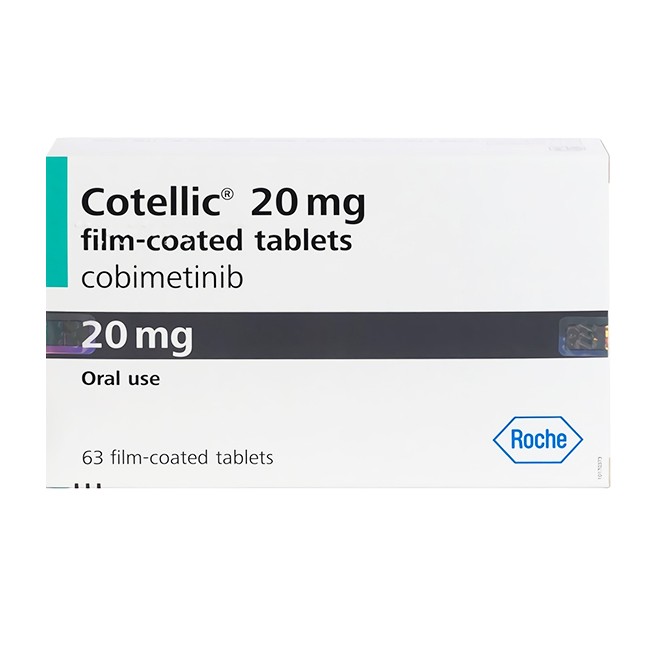
Note: For internal discussion among medical personnel only. For specific medication, please consult the attending physician. Drug information may change over time. For the latest information, we recommend adding a medical consultant or consulting for free online.
Cobimetinib(Cotellic)
Cotellic is indicated for the treatment of adult patients with melanoma...
WeChat Scan
Free Inquiry
Recommended Articles
Medication regimen for Cobimetinib patients
Cobimetinib is an oral kinase inhibitor. Standardized administration, appropriate management of adverse reactions, and avoidance of drug interactions are key to ensuring efficacy and safety.I. Basic A...
The mechanism of action of Cobimetinib
Cobimetinib is a reversible MEK1/MEK2 inhibitor that exerts antitumor effects by blocking the RAS/RAF/MEK/ERK signaling pathway and is commonly used in combination with BRAF inhibitors for BRAF V600-m...
Contraindications and side effects of Ogsiveo
Ogsiveo is used in adult patients with progressing desmoid tumors. Although it has no absolute contraindications, there are clear restrictions on use and multisystem adverse reactions.I. Contraindicat...
Healthy eating habits of Ogsiveo patients
During treatment with Ogsiveo, dietary management should address drug absorption, prevention and control of adverse reactions, and nutritional support. The following recommendations cover administrati...
Medication precautions for Mavacamten
Mavacamten is a cardiac myosin inhibitor for the treatment of symptomatic obstructive hypertrophic cardiomyopathy (HCM), which can improve functional capacity and symptoms. Due to its mechanism of act...
The mechanism of action of Mavacamten
Mavacamten is a selective cardiac myosin inhibitor that reduces excessive contraction and outflow tract obstruction in hypertrophic cardiomyopathy (HCM) by modulating the interaction between myosin an...
Healthy eating habits of Mavacamten patients
Mavacamten improves symptoms of obstructive hypertrophic cardiomyopathy by inhibiting excessive myocardial contraction, but the risk of heart failure requires vigilance during treatment. A reasonable ...
The mechanism of action of quizartinib
Quizartinib is an oral small-molecule FLT3 receptor tyrosine kinase inhibitor that inhibits the kinase activity of FLT3 and its mutants, blocks downstream signal transduction, and thereby suppresses l...
Related Articles
Side effects and special population use of Cobimetinib
Cobimetinib can cause multisystem adverse reactions, and medication use in special populations also requires differentiated management. Identifying risks and standardizing monitoring are the core of s...
Medication regimen for Cobimetinib patients
Cobimetinib is an oral kinase inhibitor. Standardized administration, appropriate management of adverse reactions, and avoidance of drug interactions are key to ensuring efficacy and safety.I. Basic A...
The mechanism of action of Cobimetinib
Cobimetinib is a reversible MEK1/MEK2 inhibitor that exerts antitumor effects by blocking the RAS/RAF/MEK/ERK signaling pathway and is commonly used in combination with BRAF inhibitors for BRAF V600-m...
Contraindications and adverse reactions of Cobimetinib
Cobimetinib is an oral MEK inhibitor used for BRAF-mutant melanoma and histiocytic neoplasms. It has no absolute contraindications, but attention should be paid to drug interactions and multisystem ad...
Special population use of Cobimetinib
The use of cobimetinib requires individualized adjustment based on the patient's physiological status and hepatic and renal function. This article reviews the key points of medication use in speci...
Healthy dietary precautions for Cobimetinib
Cobimetinib is an oral MEK inhibitor commonly used for BRAF-mutant melanoma and histiocytic neoplasms. A reasonable diet during treatment helps reduce gastrointestinal discomfort, photosensitivity rea...
What Are the Side Effects of Cobimetinib (Cotellic)?
Cobimetinib (Cotellic) is an important kinase inhibitor that plays a key role in the treatment of melanoma and histiocytic neoplasms.What Are the Side Effects of Cobimetinib (Cotellic)?Typical Reactio...
Precautions for Using Cobimetinib (Cotellic)
Cobimetinib (Cotellic) is a MEK inhibitor that demonstrates significant value in the treatment of BRAF V600 mutation-positive melanoma and histiocytic neoplasms. To ensure therapeutic benefits and min...
New Drugs
Cenobamate(Xcopri)
Cenobamate(Xcopri)
It is used for the treatment of partial-onset seizures in adults (with or...
Infigratinib(Truseltiq)
Treatment of previously treated, unresectable locally advanced or metastatic...
Opicapone(Ongentys)
Opicapone(Ongentys)
Adjunctive treatment to levodopa/carbidopa for reducing "off" episodes in...
Deflazacort(Emflaza)
Treatment of Duchenne muscular dystrophy (DMD) in patients aged 2 years and...
Counselling Service
Global Drug Search
Clinical Research Recruitment
Overseas Medical Treatment
Remote Consultations
Note: Our medical consultant will contact you as soon as possible. We promise to strictly protect your privacy.
Submit
Business
  • Core products
  • Antitumor drugs
  • General drug
  • Antiviral drugs
  • Biological agents
Contact Us 
  • haiousales@gmail.com
Welcome to consult
Seagull Pharmacy.,Ltd All rights reserved






