





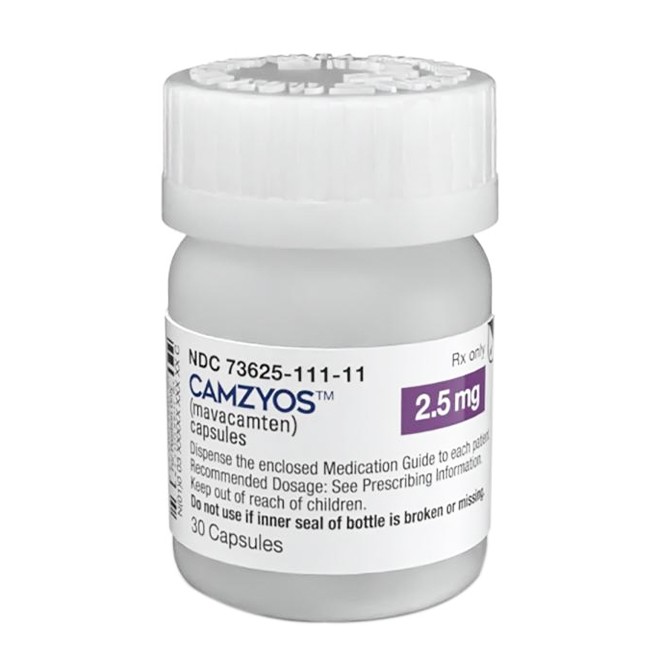
Mavacamten is a selective cardiac myosin inhibitor that reduces excessive contraction and outflow tract obstruction in hypertrophic cardiomyopathy (HCM) by modulating the interaction between myosin and actin. Its mechanism can be understood from three aspects: target, molecular effects, and clinical effects.
I. Target: Selective Inhibition of Cardiac Myosin
1. Target Specificity
Mavacamten is an allosteric, reversible, selective cardiac myosin inhibitor that acts on cardiac myosin rather than skeletal muscle myosin; target selectivity is the basis of its safety.
2. Allosteric Modulation
The drug binds to an allosteric site on myosin and does not directly block the ATPase active center; instead, it alters the functional state of myosin through conformational modulation. The effect is reversible, and function can recover after discontinuation.
3. Targeting the Pathological Basis of HCM
The mechanistic hallmarks of HCM are excessive actin-myosin cross-bridge formation and dysregulation of the super-relaxed state. Mavacamten acts on this core pathological process.
II. Molecular Effects: Reducing Cross-Bridge Formation and Promoting the Super-Relaxed State
1. Reducing the "on actin" State
Mavacamten modulates the number of myosin heads that can enter the "actin-bound" (force-generating) state, reducing the probability of entering the force-generating state.
2. Inhibiting Cross-Bridge Formation
This reduces the formation of force-producing (systolic) and residual (diastolic) cross-bridges, directly lowering myocardial contractility and alleviating excessive contraction.
3. Shifting Toward the Super-Relaxed State
The drug shifts the overall myosin population toward an "energy-sparing, recruitable super-relaxed state," reducing energy consumption while preserving some contractile reserve rather than completely suppressing contraction.
III. Clinical Effects: Relieving Obstruction and Improving Filling and Symptoms
1. Reducing Outflow Tract Obstruction
In patients with HCM, myosin inhibition reduces dynamic left ventricular outflow tract (LVOT) obstruction, which is the core mechanism for symptom improvement.
2. Improving Cardiac Filling
After moderate reduction in contractility, cardiac filling pressures improve and diastolic function benefits, relieving symptoms such as dyspnea.
3. Improvement in Structure and Biomarkers
Echocardiography shows decreases in left ventricular mass index and left atrial volume index, and wall stress biomarkers such as NT-proBNP decrease, suggesting reduced load; however, the clinical significance of these structural changes remains unclear.
4. Reversibility of Effects
Because the effect is reversible, LVEF and LVOT gradient can return to baseline after discontinuation, which supports its controllability and also requires close monitoring of cardiac function during treatment.

Free Inquiry











