





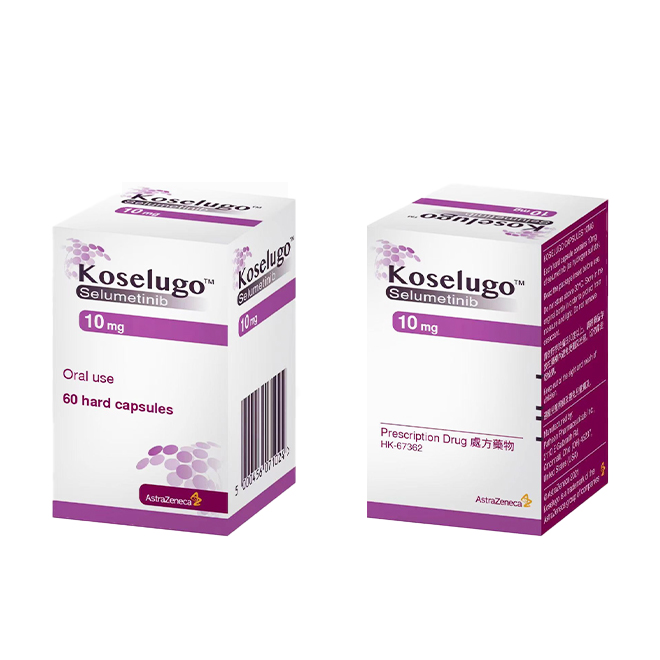
Selumetinib is a kinase inhibitor indicated for the treatment of adult and pediatric patients 1 year of age and older with neurofibromatosis type 1 (NF1) who have symptomatic, inoperable plexiform neurofibromas. During treatment, close monitoring of the cardiac, ocular, gastrointestinal, skin, and muscular systems is required, along with attention to drug interactions and risks in special populations.
I. Key Monitoring Points Before and During Treatment
1.Left Ventricular Function Monitoring
Assess ejection fraction before treatment, every 3 months during the first year, every 6 months thereafter, and as clinically indicated.
For asymptomatic decreases in ejection fraction, withhold treatment until resolution, then resume at a reduced dose.
For symptomatic decreases in ejection fraction or Grade 3-4 decreases, permanently discontinue treatment.
2.Ocular Toxicity Monitoring
Conduct a comprehensive ophthalmic assessment before treatment, at regular intervals during treatment, and promptly for new or worsening visual changes.
Permanently discontinue treatment in patients who develop retinal vein occlusion.
For retinal pigment epithelial detachment, withhold treatment and follow up with optical coherence tomography every 3 weeks until resolution, then resume at a reduced dose.
For other ocular toxicities, withhold, reduce the dose, or permanently discontinue based on severity.
3.Gastrointestinal Toxicity Management
Start an anti-diarrheal agent (e.g., loperamide) immediately after the first episode of unformed, loose stool, and increase fluid intake.
For Grade 3 diarrhea, withhold treatment; resume at the same dose after recovery to Grade 0-1; permanently discontinue if no improvement within 3 days.
For Grade 4 diarrhea or Grade 3-4 colitis, permanently discontinue treatment.
4.Skin Toxicity and Creatine Phosphokinase Monitoring
Closely monitor for severe skin rashes, including dermatitis acneiform, and withhold, reduce the dose, or permanently discontinue based on severity.
Obtain serum creatine phosphokinase before treatment, periodically during treatment, and as clinically indicated.
If creatine phosphokinase is elevated, evaluate for rhabdomyolysis or other causes; for Grade 4 elevation or elevation with myalgia, withhold treatment, permanently discontinue if no improvement within 3 weeks; permanently discontinue in confirmed rhabdomyolysis.
II. Specific Risks and Contraindications
1.Vitamin E-Related Bleeding Risk (Capsules Only)
Capsules contain vitamin E; daily intake exceeding the recommended or safe limit may increase the risk of bleeding.
Bleeding risk is further increased in patients co-administered vitamin K antagonists or antiplatelet agents, requiring enhanced monitoring.
Oral granules do not contain vitamin E and may be considered as an alternative.
2.Embryo-Fetal Toxicity
May cause fetal harm; patients of reproductive potential should use effective contraception during treatment and after the last dose.
Breastfeeding is not recommended during treatment and for a period after the last dose.
3.Dose Adjustment for Hepatic Impairment
For moderate hepatic impairment (Child-Pugh B), reduce the dose and adjust the regimen based on body surface area.
For severe hepatic impairment (Child-Pugh C), the recommended dose has not been established; use is not recommended.
III. Drug Interactions and Administration Precautions
1.CYP3A4-Related Interactions
Avoid concomitant use with strong or moderate CYP3A4 inhibitors or fluconazole; if unavoidable, reduce the dose as recommended and restore the original dose after 3 elimination half-lives of the interacting drug.
Avoid concomitant use with strong or moderate CYP3A4 inducers.
2.Administration and Missed Dose Management
Capsules must be swallowed whole and must not be opened, chewed, or crushed; they may be taken with or without food.
Oral granules are for patients who have difficulty swallowing capsules; sprinkle or mix with a small amount of soft food (e.g., yogurt, fruit puree) and consume within 30 minutes; do not add to liquids and do not mix with grapefruit or juice, puree, or jam containing Seville oranges.
If a dose is missed, take it if more than 6 hours remain before the next dose; otherwise skip it; do not take an additional dose after vomiting, and resume the next dose as scheduled.

Free Inquiry











