
info@seagull-health.com
SeagullHealth
语言:
search
new
Side effects and special population use of Ritlecitinib
514
Article source: Seagull Pharmacy
Nov 17, 2026

Ritlecitinib is a kinase inhibitor used for severe alopecia areata. Its safety risks involve infections, cardiovascular and immune aspects, and use in special populations requires careful evaluation.

I. Main Adverse Reactions

1. Serious Infections

Bacterial, fungal, viral, and opportunistic infections may occur, and severe cases can lead to hospitalization or death.

Common serious infections include appendicitis, COVID-19 (including pneumonia), and sepsis.

Contraindicated in patients with active tuberculosis; latent tuberculosis should be treated before use.

Signs of infection should be monitored during and after treatment, and treatment should be interrupted until the infection is controlled if a serious infection occurs.

Herpes zoster (including multi-dermatomal type) has been reported; consider interrupting treatment until resolution if it occurs.

2. Malignancy and Lymphoproliferative Disorders

Malignancies, including non-melanoma skin cancer, were observed in clinical trials.

In patients with known malignancy (except successfully treated non-melanoma skin cancer or cervical cancer), the benefits and risks should be weighed before use.

Regular skin examinations are recommended for those at high risk of skin cancer.

3. Cardiovascular and Thrombotic Events

Other JAK inhibitors have shown increased risks of major adverse cardiovascular events (cardiovascular death, myocardial infarction, stroke) and thrombosis in patients with rheumatoid arthritis.

Pulmonary embolism has been reported with ritlecitinib, and retinal artery occlusion has been reported in the higher-dose group.

Treatment should be discontinued if myocardial infarction or stroke occurs; treatment should be interrupted and prompt evaluation made if symptoms of thrombosis or embolism occur.

Smokers and those with cardiovascular risk factors are at higher risk, and individualized benefit-risk assessment should be made before use.

4. Hypersensitivity Reactions

Serious reactions such as anaphylaxis, urticaria, and rash were observed in clinical trials.

Treatment should be discontinued and appropriate therapy given if a clinically significant hypersensitivity reaction occurs.

5. Laboratory Abnormalities

Decreases in lymphocytes and platelets may occur and should be monitored before and during treatment.

Liver enzyme elevation may occur; treatment should be interrupted until drug-induced liver injury is ruled out if suspected.

Creatine phosphokinase elevation may be observed.

6. Other

Diabetic patients may experience hypoglycemia (including severe hypoglycemia), and blood glucose monitoring should be strengthened.

Live attenuated vaccines should be avoided during or shortly before treatment initiation.

II. Use in Special Populations

1. Hepatic Impairment

Not recommended for patients with severe hepatic impairment (Child-Pugh Class C).

2. Lactation

Breastfeeding is not recommended.

3. Children and Adolescents

Approved for severe alopecia areata in adolescents aged 12 years and older.

Safety and efficacy have not been established in individuals under 12 years of age.

4. Geriatric Patients

The risk of lower ALC may be increased in individuals aged 65 years and older, and lymphocyte counts should be monitored during treatment.

5. Diabetic Patients

Hypoglycemia may occur after administration; blood glucose monitoring should be increased, and patients should promptly inform healthcare providers if symptoms of hypoglycemia occur.

6. Patients at High Risk of Infection

In patients with chronic or recurrent infections, history of tuberculosis exposure, history of serious or opportunistic infections, or residence or travel in endemic areas, the benefits and risks should be fully assessed before use.

III. Summary of Medication Precautions

1. Pre-treatment Assessment

Screen for tuberculosis and viral hepatitis.

Test absolute lymphocyte count and platelet count.

Update immunizations according to guidelines and avoid live attenuated vaccines.

2. Monitoring During Treatment

Monitor infection symptoms, blood counts, liver function, and blood glucose.

Watch for cardiovascular and thrombotic symptoms and manage them promptly.

3. Principles of Discontinuation and Interruption

Treatment should be discontinued or interrupted for serious infections, opportunistic infections, myocardial infarction, stroke, or clinically significant hypersensitivity reactions.

Treatment should be discontinued if platelet count is <50,000/mm³; treatment should be interrupted if ALC is <500/mm³ and may be restarted after recovery.

Note: For internal discussion among medical personnel only. For specific medication, please consult the attending physician. Drug information may change over time. For the latest information, we recommend adding a medical consultant or consulting for free online.
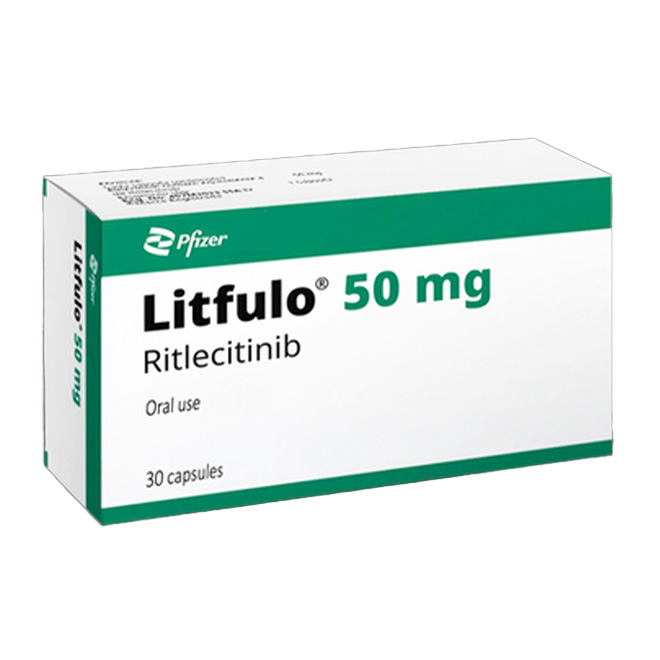
Ritlecitinib(Litfulo)
Adolescents aged 12 years and older, as well as adult patients, with alopecia...
WeChat Scan
Free Inquiry
Recommended Articles
Indications, usage and dosage of Ritlecitinib
Ritlecitinib is a kinase inhibitor first approved in the United States in 2023 for the treatment of certain types of hair loss disorders. The following provides an overview of its indications and dosa...
Side effects and special population use of Vandetanib
While effectively treating medullary thyroid cancer, vandetanib can cause multi-system adverse reactions involving the heart, skin, lungs, and other systems; special populations require dosing strateg...
Healthy eating habits for patients with Vandetanib
During vandetanib treatment, dietary management should focus on cardiac safety, gastrointestinal tolerance, and nutritional support to optimize drug efficacy and reduce risks.I. Maintaining electrolyt...
The mechanism of action of Vandetanib
Vandetanib is a multi-targeted tyrosine kinase inhibitor that exerts anti-medullary thyroid cancer effects by blocking key signaling pathways of tumor cell proliferation and angiogenesis, and by inhib...
Healthy eating habits for patients with Ritlecitinib
Ritlecitinib is used for the treatment of severe alopecia areata. Maintaining a healthy diet during treatment helps stabilize the body's condition and reduce medication-related risks. The followin...
Side effects and special population use of Rezdifra
Resmetirom is a THR-β agonist indicated for the treatment of adults with noncirrhotic MASH with F2 to F3 fibrosis, in conjunction with diet and exercise.I. Adverse Reactions1. HepatotoxicityElevations...
The mechanism of action of Rezdifra
Resmetirom is a thyroid hormone receptor beta (THR-β) partial agonist that exerts its therapeutic effect on MASH by targeting hepatic THR-β.I. Target: Partial Agonism of THR-β1. Receptor SelectivityTh...
Healthy eating habits for patients with Rezdifra
Resmetirom must be used in conjunction with diet and exercise, and a healthy diet is the foundation of MASH treatment. This article provides dietary guidance for patients taking the medication from th...
Related Articles
Healthy eating habits for patients with Ritlecitinib
Ritlecitinib is used for the treatment of severe alopecia areata. Maintaining a healthy diet during treatment helps stabilize the body's condition and reduce medication-related risks. The followin...
Side effects and special population use of Ritlecitinib
Ritlecitinib is a kinase inhibitor used for severe alopecia areata. Its safety risks involve infections, cardiovascular and immune aspects, and use in special populations requires careful evaluation.I...
Indications, usage and dosage of Ritlecitinib
Ritlecitinib is a kinase inhibitor first approved in the United States in 2023 for the treatment of certain types of hair loss disorders. The following provides an overview of its indications and dosa...
Side effects of Ritlecitinib
Like many medications, Ritlecitinib can be used with a range of side effects. Understanding these side effects, their mitigations, and day-to-day precautions is important for patients to use the ...
Things to note about Ritlecitinib
There are some important precautions to follow when treating alopecia areata with litfullo. These precautions ensure that patients achieve the best treatment effect during medication use and minimize ...
Dosage of Ritlecitinib
Ritlecitinib is an innovative oral kinase inhibitor that brings a new treatment option to patients with severe alopecia areata. Its precise dosing, complex drug interactions, and guidance for spe...
The role and efficacy of Ritlecitinib
Ritlecitinib, an innovative kinase inhibitor, brings a new treatment option to patients with severe alopecia areata. Its unique pharmacological effects, clear indications, detailed dosage guidance, an...
How much is a course of Ritlecitinib?
Ritlecitinib, an innovative oral kinase inhibitor, brings a new treatment option to patients with severe alopecia areata. There is also a growing concern about the cost of the treatment, dosage and di...
New Drugs
Cenobamate(Xcopri)
Cenobamate(Xcopri)
It is used for the treatment of partial-onset seizures in adults (with or...
Infigratinib(Truseltiq)
Treatment of previously treated, unresectable locally advanced or metastatic...
Opicapone(Ongentys)
Opicapone(Ongentys)
Adjunctive treatment to levodopa/carbidopa for reducing "off" episodes in...
Deflazacort(Emflaza)
Treatment of Duchenne muscular dystrophy (DMD) in patients aged 2 years and...
Counselling Service
Global Drug Search
Clinical Research Recruitment
Overseas Medical Treatment
Remote Consultations
Note: Our medical consultant will contact you as soon as possible. We promise to strictly protect your privacy.
Submit
Business
  • Core products
  • Antitumor drugs
  • General drug
  • Antiviral drugs
  • Biological agents
Contact Us 
  • haiousales@gmail.com
Welcome to consult
Seagull Pharmacy.,Ltd All rights reserved






