





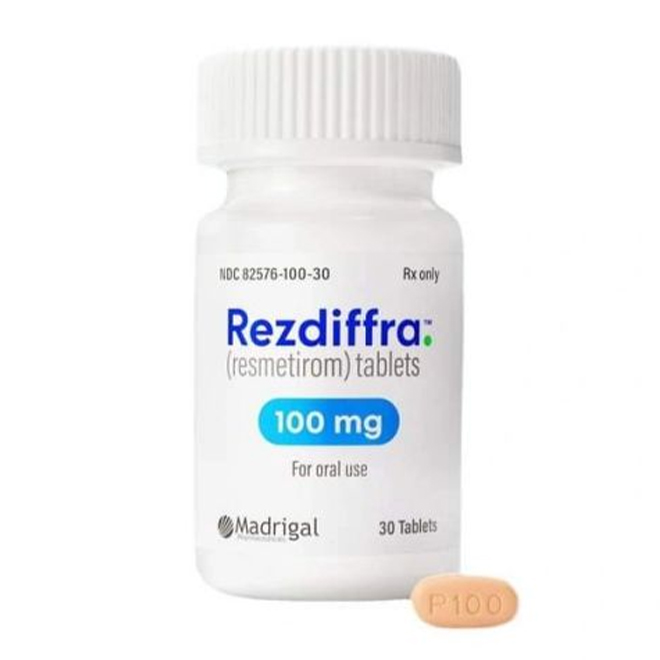
Resmetirom is a THR-β agonist indicated for the treatment of adults with noncirrhotic MASH with F2 to F3 fibrosis, in conjunction with diet and exercise.
I. Adverse Reactions
1. Hepatotoxicity
Elevations in liver enzymes may occur during treatment, and individual cases have presented as drug-induced autoimmune-like hepatitis, which resolved after discontinuation. Liver function and manifestations such as fatigue, nausea, right upper quadrant pain, jaundice, fever, and rash should be monitored during treatment. If hepatotoxicity is suspected, discontinue the drug and continue monitoring; restarting after laboratory values return to baseline requires weighing risks and benefits, and autoimmune liver disease should be considered if values do not return to baseline.
2. Gallbladder-Related Adverse Reactions
Cholelithiasis, acute cholecystitis, and gallstone-related obstructive pancreatitis are more common in treated patients. If cholelithiasis is suspected, gallbladder diagnostic studies and follow-up are indicated; if an acute gallbladder event is suspected, interrupt treatment until the event resolves.
3. Gastrointestinal Reactions
Diarrhea, nausea, vomiting, constipation, and abdominal pain are common, usually occurring early in treatment and mild to moderate in severity. Diarrhea and nausea are the most common causes of discontinuation. Pruritus and dizziness may also occur.
4. Hypersensitivity and Other Reactions
Hypersensitivity reactions such as urticaria and rash may occur. Less common reactions include decreased appetite, flatulence, dysgeusia, palpitations, and depression.
5. Drug Interactions with Statins
Concomitant use increases exposure to atorvastatin, pravastatin, rosuvastatin, and simvastatin, raising the risk of liver enzyme elevation, myopathy, and rhabdomyolysis; the daily statin dosage should be limited and patients monitored.
II. Use in Specific Populations
1. Patients with Hepatic Impairment
Avoid use in patients with moderate to severe hepatic impairment (Child-Pugh Class B or C) and decompensated cirrhosis, because of increased exposure and risk of adverse reactions. No dosage adjustment is needed for mild hepatic impairment (Class A). Safety and effectiveness have not been established in patients with MASH cirrhosis.
2. Patients with Renal Impairment
No dosage adjustment is needed for mild, moderate, or severe renal impairment; the dosage is the same as in patients with normal renal function.
3. Geriatric Patients
No overall difference in effectiveness was observed in patients aged 65 years and older, but the incidence of adverse reactions was numerically higher; monitoring should be strengthened during treatment.
4. Pregnancy and Lactation
Data on use in pregnant women are lacking. Animal studies show embryo-fetal developmental adverse effects, decreased birthweight, and increased stillbirths at maternally toxic doses. MASH with liver fibrosis itself increases the risks of gestational diabetes, hypertensive complications, preterm birth, and postpartum hemorrhage. The effects of use during lactation on the infant and milk production are unclear; the benefits of breastfeeding should be weighed against the mother's need for treatment.
5. Pediatric Patients
Safety and effectiveness in pediatric patients have not been established.
III. Precautions for Use
1. Dosage and Administration
Dose by actual body weight: 80 mg once daily for patients <100 kg and 100 mg once daily for those ≥100 kg; may be taken with or without food. Tablets must be swallowed whole and must not be split, crushed, or chewed. If a dose is missed, do not take the missed dose and resume with the next scheduled dose.
2. Concomitant Use with CYP2C8 Inhibitors
Concomitant use with strong CYP2C8 inhibitors (e.g., gemfibrozil) is prohibited. When used with moderate inhibitors (e.g., clopidogrel), reduce the dose: to 60 mg once daily for patients <100 kg and to 80 mg once daily for those ≥100 kg.
3. Concomitant Use with CYP2C8 Substrates
Resmetirom is a weak CYP2C8 inhibitor and may increase exposure to drugs metabolized by CYP2C8 (e.g., repaglinide). When used concomitantly, substrate-related adverse reactions should be monitored more closely.
4. Monitoring Points
Monitor liver function regularly during treatment and watch for gastrointestinal symptoms and signs of gallbladder events; in patients taking statins, monitor liver enzymes and myopathy, and manage abnormalities promptly.

Free Inquiry











