





Ritlecitinib is a kinase inhibitor first approved in the United States in 2023 for the treatment of certain types of hair loss disorders. The following provides an overview of its indications and dosage and administration.
I. Indications
1. Approved Indication
For the treatment of severe alopecia areata in adults and adolescents aged 12 years and older.
Alopecia areata includes patchy hair loss, alopecia totalis, and alopecia universalis.
2. Limitations of Use
Not recommended for use in combination with other JAK inhibitors.
Not recommended for use in combination with biologic immunomodulators, cyclosporine, or other potent immunosuppressants.
3. Applicability in Special Populations
Not recommended for patients with severe hepatic impairment (Child-Pugh Class C).
Breastfeeding is not recommended for lactating women.
Not indicated for patients with rheumatoid arthritis.
II. Dosage and Administration
1. Recommended Dose
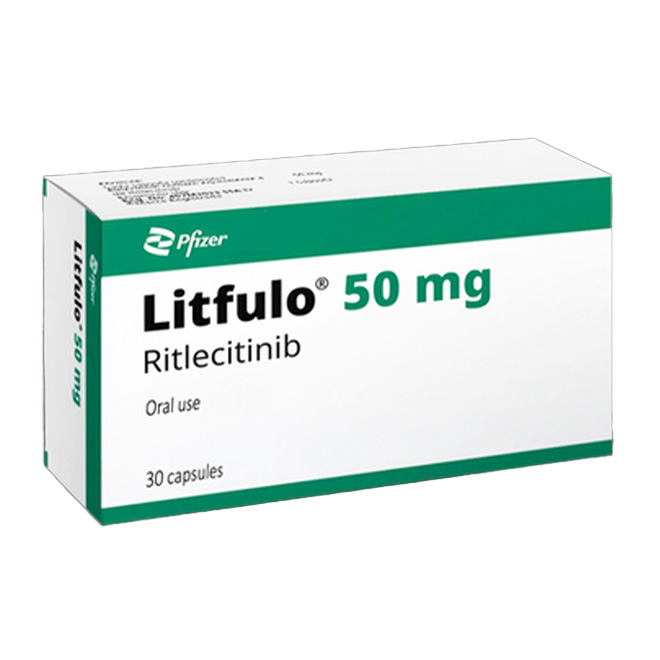
The recommended dose is 50 mg orally once daily, with or without food.
Capsules should be swallowed whole and must not be crushed, split, or chewed.
2. Missed Dose
If a dose is missed, it should be taken as soon as possible.
If less than 8 hours remain before the next scheduled dose, the missed dose should be skipped, and dosing should resume at the regular scheduled time.
3. Treatment Interruption and Discontinuation
A short-term interruption (less than 6 weeks) is generally not expected to cause significant loss of regrown scalp hair.
Treatment should be interrupted if a serious infection occurs and may be resumed once the infection is controlled.
Treatment should be discontinued in patients who experience myocardial infarction or stroke.
III. Pre-treatment Evaluation and Monitoring
1. Pre-treatment Evaluation
Tuberculosis screening: treatment must not be initiated in patients with active tuberculosis; patients with latent tuberculosis or high-risk individuals with negative test results should receive preventive treatment first.
Viral hepatitis screening: treatment is not recommended for patients with hepatitis B or hepatitis C.
Hematologic tests: treatment should not be initiated in patients with an absolute lymphocyte count (ALC) <500/mm³ or a platelet count <100,000/mm³.
Vaccination: immunizations should be updated according to current guidelines.
2. Monitoring During Treatment
ALC and platelet counts should be measured before treatment initiation and at 4 weeks after initiation, and thereafter according to routine management.
Treatment should be discontinued if the platelet count is <50,000/mm³; treatment should be interrupted if ALC is <500/mm³ and restarted after recovery.
Signs and symptoms of infection should be monitored, especially tuberculosis.
Liver function should be monitored; if drug-induced liver injury is suspected, treatment should be interrupted until it is ruled out.
Diabetic patients should strengthen blood glucose monitoring and be alert for hypoglycemia.
Patients at risk for skin cancer are advised to undergo regular skin examinations.
3. Key Points on Drug Interactions
Ritlecitinib is an inhibitor of CYP3A and CYP1A2; when used with related substrates, monitoring and dose adjustment should be considered.
Concomitant use with strong CYP3A inducers (e.g., rifampin) is not recommended to avoid reduced efficacy.
Live attenuated vaccines should be avoided during or shortly before treatment initiation.

Free Inquiry











