





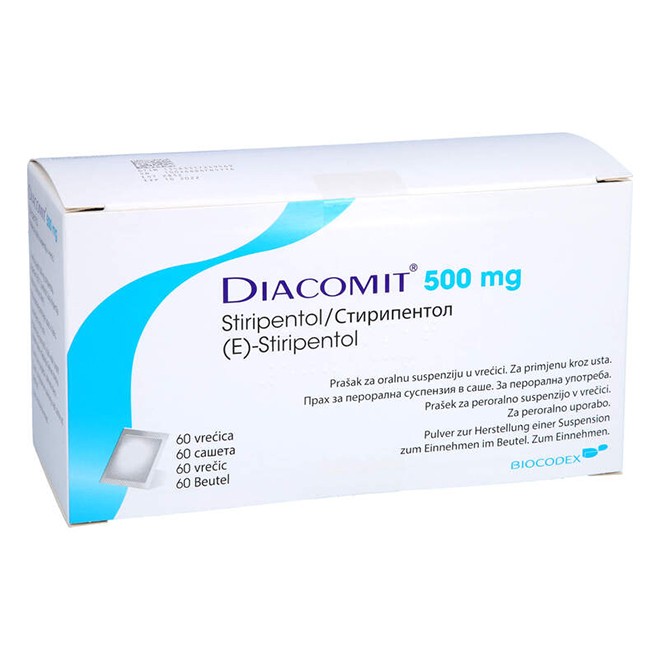
Stiripentol is an adjunctive medication for the treatment of seizures associated with Dravet syndrome and must be used in combination with clobazam. Its anticonvulsant mechanism has not been fully elucidated and is currently thought to involve both direct and indirect pathways.
I. Direct Action: Enhancement of GABA Receptor-Mediated Inhibition
1. Targeting the GABAergic System
Stiripentol can act directly on gamma-aminobutyric acid (GABA) receptors, enhancing the function of the central inhibitory neurotransmitter GABA, thereby raising the neuronal excitation threshold and inhibiting the spread of abnormal discharges. This is the direct pharmacological basis for its anticonvulsant effect.
2. The Mechanism Remains Uncertain
The prescribing information explicitly states that the exact mechanism by which stiripentol exerts its anticonvulsant effect in humans is unknown, and the direct GABA receptor effect is one of the "possible mechanisms" and has not been fully confirmed.
II. Indirect Action: Inhibition of Hepatic Drug-Metabolizing Enzymes and Increased Clobazam Exposure
1. Inhibition of CYP3A4 and CYP2C19
Stiripentol is a metabolic inhibitor of the cytochrome P450 enzyme system, primarily inhibiting CYP3A4 and CYP2C19. Clobazam is metabolized by CYP3A4, and its active metabolite norclobazam is metabolized by CYP2C19; both pathways are blocked simultaneously.
2. Significant Increase in Plasma Concentrations
Clinical studies have shown that concomitant use of stiripentol can increase the plasma concentration of clobazam by approximately 2-fold and that of norclobazam by approximately 5-fold. Clobazam itself is an antiepileptic drug, and the increased exposure constitutes an important indirect source of stiripentol's efficacy, which also explains the indication restriction requiring their combined use.
3. Broad Effects on Other Substrates
Stiripentol both inhibits and induces CYP1A2, CYP2B6, and CYP3A4, and inhibits CYP2C8, CYP2C19, and the P-gp and BCRP transporters; therefore, dose adjustments should be evaluated when multiple substrate drugs are used concomitantly.
III. Pharmacokinetic and Safety Implications Related to the Mechanism
1. Absorption and Distribution Characteristics
After oral administration, peak plasma concentration is reached at approximately 2 to 3 hours, protein binding is as high as 99%, and the elimination half-life prolongs with increasing dose, ranging from 4.5 to 13 hours. In children, the half-life prolongs with increasing body weight.
2. Metabolism and Excretion
Stiripentol is mainly metabolized in the liver by CYP1A2, CYP2C19, and CYP3A4, and its metabolites are mainly excreted by the kidneys. It is not recommended for use in patients with moderate to severe hepatic or renal impairment.
3. Clinical Risks Derived from the Mechanism
Enzyme inhibition increases the concentrations of clobazam and related substrates and is an important cause of central nervous system depressant reactions such as somnolence and sedation; when such reactions occur, an initial 25% reduction of clobazam may be considered. Strong inducers (such as rifampin, phenytoin, phenobarbital, and carbamazepine) can accelerate the metabolism of stiripentol and reduce its concentration, and concomitant use should be avoided or the dosage adjusted.

Free Inquiry











