





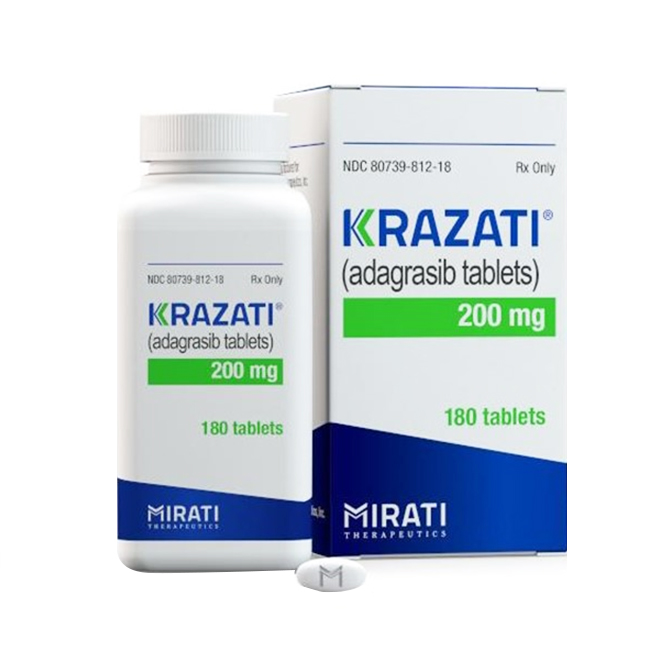
Adagrasib is an irreversible KRAS G12C inhibitor that covalently binds to and locks the mutant protein in its inactive state, blocking downstream signaling.
I. Target Basis: KRAS G12C Mutation and Signaling Pathways
1. RAS GTPase Family and KRAS
KRAS belongs to the RAS GTPase family and is a key molecular switch regulating cell proliferation, survival, and differentiation. Wild-type KRAS cycles between GTP-bound (active) and GDP-bound (inactive) states, with signaling under strict control.
2. Oncogenic Mechanism of the G12C Mutation
Substitution of glycine at position 12 with cysteine (G12C) causes KRAS protein to lose GTP hydrolysis capacity and remain persistently in the GTP-bound active state, abnormally activating downstream RAF/MEK/ERK pathways and driving tumor development. This mutation is found in both non-small cell lung cancer and colorectal cancer.
3. Druggability of the Mutant Cysteine
The sulfhydryl group (-SH) introduced by the G12C mutation provides a reaction site for covalent drugs, enabling irreversible inhibitors to selectively target the mutant protein; this is the structural basis for drugging this target.
II. Molecular Mechanism: Covalent Binding and Selective Inhibition
1. Irreversible Covalent Binding
Adagrasib contains an electrophilic acrylamide group that covalently reacts with the sulfhydryl group of the mutant cysteine in KRAS G12C, forming a stable covalent bond and achieving irreversible occupancy of the target.
2. Locking the Inactive Conformation
Covalent binding locks mutant KRAS in the GDP-bound inactive state, preventing its conversion to the active conformation and thereby blocking downstream signaling. This "lock-in" mechanism does not rely on competitive occupancy of the nucleotide-binding pocket.
3. Selectivity for Wild-Type KRAS
The drug selectively acts on the mutant cysteine with no significant effect on wild-type KRAS protein, reducing interference with normal RAS signaling; this is the basis for its selective antitumor activity.
III. Cellular and Combination Effects: Antitumor Activity and Synergy
1. Inhibition of Tumor Cell Growth
In tumor cells harboring KRAS G12C mutations, adagrasib inhibits cell growth and viability and induces tumor regression in mutant tumor xenograft models with minimal off-target activity.
2. Synergy with Cetuximab
In some KRAS G12C-mutant colorectal cancer cell lines and patient-derived xenograft models, adagrasib combined with cetuximab (an EGFR monoclonal antibody) showed stronger antitumor activity than either agent alone, suggesting that combining blockade of downstream KRAS signaling with upstream EGFR signaling can enhance efficacy.
3. Mechanism-Related Pharmacodynamic Characteristics
Adagrasib prolongs the QTc interval in a concentration-dependent manner, with a mean QTcF increase from baseline of approximately 18 ms at steady-state peak concentration, suggesting that its cardiac electrophysiological effects are related to exposure levels and require attention during treatment.

Free Inquiry











