
info@seagull-health.com
SeagullHealth
语言:
search
new
Side effects and adverse reactions of Vadadustat
513
Article source: Seagull Pharmacy
Sep 23, 2026

Vadadustat is used for anemia in chronic kidney disease patients on dialysis, but it may cause serious adverse reactions such as thrombosis, liver injury, and increased blood pressure, requiring close monitoring. The following is explained in three aspects.

I. Serious Adverse Reactions

1.Thrombosis and Cardiovascular Events

It may increase the risk of death, myocardial infarction, stroke, venous thromboembolism, and vascular access thrombosis.

If hemoglobin rises too quickly or the target exceeds 11 g/dL, the above risks are further amplified.

Patients with cardiovascular or cerebrovascular disease are at higher risk; those with recent myocardial infarction, cerebrovascular events, or acute coronary syndrome should avoid use.

If chest pain, difficulty breathing, hemiplegia, slurred speech, sudden vision changes, lower limb swelling and pain, or dialysis access abnormalities occur, seek medical attention immediately.

2.Hepatotoxicity

It may cause hepatocellular injury, mostly occurring within the first 3 months of treatment.

It presents as elevated ALT, AST, and bilirubin, mostly asymptomatic, and may recover after discontinuation.

If ALT or AST persistently exceeds 3 times the upper limit of normal, or is accompanied by bilirubin exceeding 2 times the upper limit of normal, the drug should be discontinued.

It is not recommended for patients with cirrhosis or active acute liver disease.

3.Worsening Blood Pressure

It may lead to worsening hypertension, and even hypertensive crisis, hypertensive encephalopathy, and seizures.

It is contraindicated in patients with uncontrolled hypertension.

Blood pressure should be monitored regularly during medication, and antihypertensive treatment should be adjusted or initiated when necessary.

4.Seizures

Seizures may occur during treatment.

Attention should be paid to new-onset seizures, aura symptoms, or changes in seizure frequency.

If headache, irritability, fear, confusion, or abnormal sensations occur, inform the doctor promptly.

5.Gastrointestinal Erosion and Bleeding

Gastric or esophageal erosion and gastrointestinal bleeding may occur.

Patients with a history of gastrointestinal erosion, peptic ulcer, concomitant use of drugs that increase erosion risk, smoking, or alcohol consumption are at higher risk.

If abdominal pain, black stools, hematemesis, difficulty swallowing, or retrosternal pain occurs, seek medical attention immediately.

6.Malignancy Risk

It may adversely affect cancer growth.

It is not recommended for patients with active malignancy.

During medication, attention should be paid to cancer-related symptoms, and a doctor should be consulted if there are concerns.

II. Other Common Adverse Reactions

1.Digestive System

Diarrhea is relatively common, and nausea, vomiting, and abdominal pain may also occur.

Some patients require permanent discontinuation due to gastrointestinal symptoms.

2.Nervous System

Headache and dizziness may occur.

Dizziness may present as vertigo, balance disturbance, or presyncope.

3.Other

Fatigue, weakness, and malaise.

Difficulty breathing and shortness of breath.

Arteriovenous fistula thrombosis.

Dialysis-related complications.

III. Special Populations and Medication Precautions

1.Pregnancy and Lactation

It may harm the fetus during pregnancy, and should be used only when the benefits outweigh the risks.

It is not recommended during lactation, and breastfeeding should not occur within 2 days after discontinuation.

2.Pediatric and Elderly

Safety and effectiveness in pediatric patients have not been established.

Elderly patients do not need dose adjustment based on age alone, but overall condition should be monitored.

3.Patients With Liver Injury

It is not recommended for patients with cirrhosis or active acute liver disease.

4.Adverse Reactions Related to Drug Interactions

Concomitant use with oral iron supplements, iron-containing products, and phosphate binders reduces vadadustat exposure and affects efficacy, so administration should be staggered.

Concomitant use with BCRP substrates, statins, and OAT3 substrates may increase the exposure and adverse reaction risk of these drugs, requiring monitoring and dose adjustment as appropriate.

5.Overdose

Overdose can cause excessive elevation of hemoglobin.

The dose should be reduced or the drug discontinued, and management should be based on clinical needs; dialysis can remove about 16% of the drug, and there is no specific antidote.

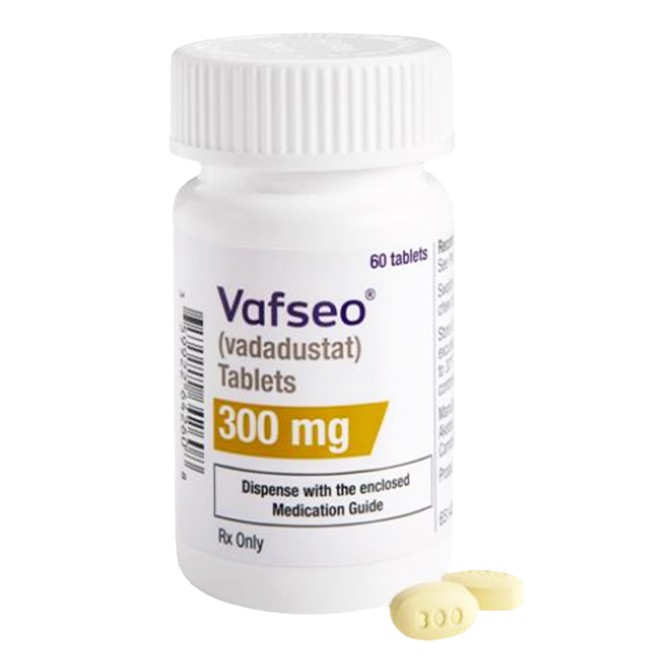
Note: For internal discussion among medical personnel only. For specific medication, please consult the attending physician. Drug information may change over time. For the latest information, we recommend adding a medical consultant or consulting for free online.
Vadadustat(Vafseo)
Vadadustat(Vafseo)
Treatment of anemia in adults with chronic kidney disease (CKD) who have been...
WeChat Scan
Free Inquiry
Recommended Articles
What are the side effects of Selpercatinib?
Common side effects of Selpercatinib include musculoskeletal pain, edema, diarrhea, fatigue, dry mouth, and hypertension. Different measures are taken depending on the severity of the side effects.Com...
Usage Guidelines for Selpercatinib
The FDA prescribing information lists dosage forms including capsules (40 mg, 80 mg) and tablets (40 mg, 80 mg, 120 mg, 160 mg). Both dosage forms are bioequivalent and interchangeable.1. Starting Dos...
What kind of medicine is Selpercatinib?
Selpercatinib is the world's first approved highly selective RET inhibitor, first approved in the United States in May 2020 and officially launched in mainland China in September 2022.Indications ...
Side Effects and Adverse Reactions of Cenobamate
Cenobamate is used for the treatment of partial-onset seizures in adults. Its overall tolerability is acceptable, but vigilance regarding serious adverse reactions and common side effects is still nec...
Precautions for the use of Vadadustat
Vadadustat is used for anemia in adults with chronic kidney disease who have been on dialysis for at least three months, and its use requires vigilance for risks such as thrombosis, liver injury, and ...
Storage environment for Vadadustat
The storage of vadadustat requires attention to temperature, packaging, and storage safety, and proper storage can ensure stable drug efficacy. The following is explained from three aspects: temperatu...
Special population use of Cenobamate
Cenobamate is used for partial-onset seizures in adults. Dosing in special populations should be adjusted based on hepatic and renal function, age, and physiological status to ensure safety.I. Use in ...
Dietary precautions for Cenobamate
Cenobamate is taken orally for partial-onset seizures in adults. Its dietary precautions mainly involve administration methods, alcohol, and the synergistic effects of central nervous system depressan...
Related Articles
Side effects of Vadadustat
Vadadustat is used for anemia of chronic kidney disease in dialysis patients and may cause multiple types of adverse reactions involving the cardiovascular, hepatic, and gastrointestinal systems, requ...
Dietary precautions for patients with Vadadustat
Vadadustat is an oral treatment for anemia of chronic kidney disease, and diet and medication timing directly affect efficacy and safety, requiring special attention.1. Basic Relationship Between Medi...
Special population medication for Vadadustat
Vadadustat is used in adults with anemia of chronic kidney disease who have been on dialysis for at least 3 months, and use in special populations requires careful assessment of risks and benefits.1. ...
Storage environment for Vadadustat
The storage of vadadustat requires attention to temperature, packaging, and storage safety, and proper storage can ensure stable drug efficacy. The following is explained from three aspects: temperatu...
Precautions for the use of Vadadustat
Vadadustat is used for anemia in adults with chronic kidney disease who have been on dialysis for at least three months, and its use requires vigilance for risks such as thrombosis, liver injury, and ...
Side effects and adverse reactions of Vadadustat
Vadadustat is used for anemia in chronic kidney disease patients on dialysis, but it may cause serious adverse reactions such as thrombosis, liver injury, and increased blood pressure, requiring close...
How to Use Vadadustat (Vafseo)
Vadadustat (Vafseo) is a hypoxia-inducible factor prolyl hydroxylase (HIFPH) inhibitor, indicated for the treatment of anemia associated with chronic kidney disease (CKD) in adults who have been recei...
Indications for Vadadustat (Vafseo)
Vadadustat (Vafseo) is a hypoxia-inducible factor prolyl hydroxylase (HIFPH) inhibitor, used for the treatment of anemia caused by chronic kidney disease (CKD).Indications for Vadadustat (Vafseo)Indic...
New Drugs
Cenobamate(Xcopri)
Cenobamate(Xcopri)
It is used for the treatment of partial-onset seizures in adults (with or...
Infigratinib(Truseltiq)
Treatment of previously treated, unresectable locally advanced or metastatic...
Opicapone(Ongentys)
Opicapone(Ongentys)
Adjunctive treatment to levodopa/carbidopa for reducing "off" episodes in...
Deflazacort(Emflaza)
Treatment of Duchenne muscular dystrophy (DMD) in patients aged 2 years and...
Counselling Service
Global Drug Search
Clinical Research Recruitment
Overseas Medical Treatment
Remote Consultations
Note: Our medical consultant will contact you as soon as possible. We promise to strictly protect your privacy.
Submit
Business
  • Core products
  • Antitumor drugs
  • General drug
  • Antiviral drugs
  • Biological agents
Contact Us 
  • haiousales@gmail.com
Welcome to consult
Seagull Pharmacy.,Ltd All rights reserved






