info@seagull-health.com
SeagullHealth
语言:
search
new
Dietary precautions for patients with Capmatinib
508
Article source: Seagull Pharmacy
Oct 09, 2026

Capmatinib may be taken with or without food, but dietary components, dosing habits, and concomitant medications can directly affect efficacy and safety. The following explains administration, dietary choices, and contraindications.

1. Administration and Timing with Meals

1. May Be Taken With or Without Food

The recommended dose is 400 mg twice daily.

It may be taken before or after meals; there is no need to avoid meal times.

Keep dosing times relatively consistent each day, about 12 hours apart.

2. Swallow Tablets Whole

Swallow whole with water; do not break, crush, or chew.

Drink a small amount of water to help swallowing and avoid dry swallowing, which can irritate the esophagus.

3. Missed Dose and Vomiting

If a dose is missed or vomited after taking, do not make up the dose.

Take the next dose at its scheduled time; do not take a double dose at once.

4. Avoid Large High-Fat Meals

A high-fat diet can increase capmatinib exposure in the body.

Avoid consuming large amounts of fried or greasy foods around the time of dosing.

Keep the daily diet light and balanced; avoid overeating.

2. Dietary Choices and Nutritional Support

1. Ensure Adequate Hydration

Drink plenty of water during treatment to help eliminate metabolites.

If vomiting or diarrhea occurs, replenish water and electrolytes even more.

2. Choose Easily Digestible, High-Protein Foods

Such as lean meat, fish, eggs, and soy products, to help maintain strength.

Eat small, frequent meals to reduce the impact of nausea and decreased appetite.

3. Managing Decreased Appetite

Prioritize nutrient-dense foods such as milk, eggs, and fish.

Avoid greasy, spicy, or strongly aromatic foods.

Engage in appropriate activity before meals to improve appetite.

4. Monitor Electrolytes and Blood Glucose

Capmatinib may cause changes in laboratory parameters such as serum sodium, potassium, and glucose.

Include an appropriate amount of fresh fruits and vegetables in the diet; avoid extreme dieting.

If fatigue, muscle cramps, or palpitations occur, seek medical evaluation promptly.

5. Pay Attention to Liver and Pancreatic Function

Avoid long-term heavy alcohol use to reduce the burden on the liver.

If upper abdominal pain or worsening nausea and vomiting occurs, be alert to pancreatic problems.

Regularly recheck liver function, amylase, and lipase.

3. Dietary Contraindications and Drug Interactions

1. Avoid St. John's Wort

St. John's wort is a strong CYP3A inducer and can significantly reduce capmatinib exposure.

Do not use herbal teas or supplements containing St. John's wort during treatment.

2. Use Strong or Moderate CYP3A Inducers with Caution

Such as rifampin, carbamazepine, phenytoin, and efavirenz.

Avoid concomitant use with capmatinib whenever possible to avoid affecting antitumor activity.

3. Use Strong CYP3A Inhibitors with Caution

Such as itraconazole and clarithromycin, which may increase capmatinib exposure.

If concomitant use is necessary, monitor adverse reactions closely.

4. Grapefruit and Grapefruit Products

Grapefruit can inhibit CYP3A enzymes and may affect capmatinib metabolism.

Avoid eating grapefruit or drinking grapefruit juice during treatment.

5. Note Foods and Drinks Metabolized by CYP1A2

Capmatinib can increase caffeine exposure.

Drinking large amounts of coffee, strong tea, or energy drinks may worsen palpitations and insomnia.

Consume in moderation and observe your own response.

6. Avoid Excessive Intake of Photosensitizing Foods

Capmatinib carries a risk of photosensitivity reactions.

Use sun protection during treatment and avoid prolonged ultraviolet exposure.

Use sunscreen and wear long sleeves during outdoor activities.

7. Inform the Doctor of Concomitant Medications and Supplements

Including prescription drugs, over-the-counter drugs, vitamins, and herbal products.

Consult a doctor or pharmacist before adding any new dietary supplement.

8. Do Not Breastfeed During Lactation

Do not breastfeed during treatment and for 1 week after the last dose.

Dietary adjustments during lactation cannot replace the requirement to stop breastfeeding.

Note: For internal discussion among medical personnel only. For specific medication, please consult the attending physician. Drug information may change over time. For the latest information, we recommend adding a medical consultant or consulting for free online.
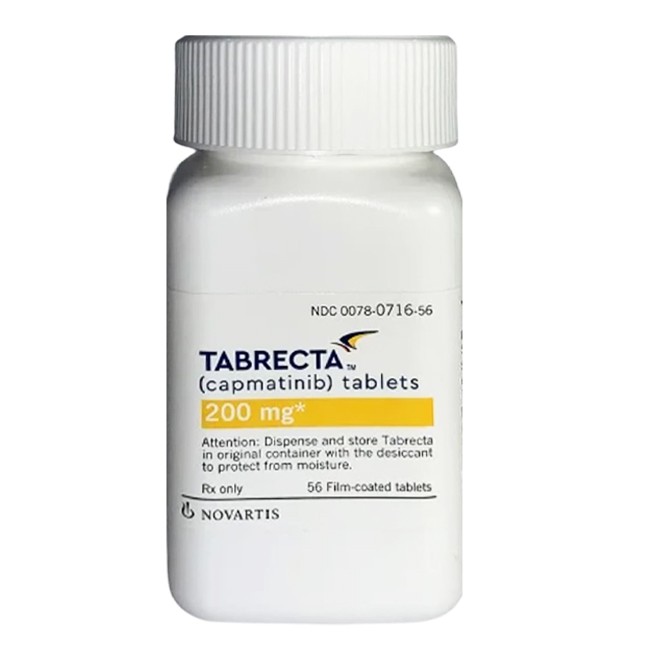
Capmatinib(Tabrecta)
Treatment of metastatic non-small cell lung cancer (NSCLC) with MET exon 14...
WeChat Scan
Free Inquiry
Recommended Articles
Usage and dosage of Capmatinib
Capmatinib is a MET kinase inhibitor indicated for the treatment of adult patients with metastatic non-small cell lung cancer harboring a mutation that leads to MET exon 14 skipping. The following exp...
Side effects and adverse reactions of Pacritinib
Pacritinib is used to treat myelofibrosis with low platelets. During treatment, various adverse reactions may occur, and monitoring should focus on bleeding, gastrointestinal, and cardiovascular event...
Dietary precautions for patients with Pacritinib
During oral treatment with pacritinib, diet is closely related to the method of administration, gastrointestinal reactions, and concomitant medications. Patients should pay attention to the following ...
Special population use of Pacritinib
Pacritinib is used in adult patients with myelofibrosis and a platelet count below 50×10⁹/L. For use in special populations, attention should focus on hepatic function, renal function, pregnancy, lact...
Contraindications and Adverse Reactions of Capmatinib
Capmatinib is used for metastatic non-small cell lung cancer with a mutation that leads to MET exon 14 skipping. It has no absolute contraindications, but several adverse reactions require close monit...
Precautions for healthy diet of patients with Epclusa
During treatment with Epclusa, there are no special dietary restrictions, but a reasonable diet can help reduce discomfort and ensure efficacy. The following explains from three aspects.I. Administrat...
Special population use of Epclusa
Epclusa requires no dosage adjustment in most special populations, but some populations require careful evaluation. The following explains three situations separately.I. Populations with Abnormal Live...
Contraindications and adverse reactions of Epclusa
Epclusa is generally well tolerated, but contraindications and adverse reactions require special attention when combined with ribavirin. The following explains from three aspects.I. Contraindications1...
Related Articles
Contraindications and Adverse Reactions of Capmatinib
Capmatinib is used for metastatic non-small cell lung cancer with a mutation that leads to MET exon 14 skipping. It has no absolute contraindications, but several adverse reactions require close monit...
Dietary precautions for patients with Capmatinib
Capmatinib may be taken with or without food, but dietary components, dosing habits, and concomitant medications can directly affect efficacy and safety. The following explains administration, dietary...
Usage and dosage of Capmatinib
Capmatinib is a MET kinase inhibitor indicated for the treatment of adult patients with metastatic non-small cell lung cancer harboring a mutation that leads to MET exon 14 skipping. The following exp...
Guidelines for Adverse Effect Management and Storage of Capmatinib (Tabrecta)
While effectively inhibiting tumors, capmatinib (Tabrecta) may induce a variety of adverse reactions.I. Common Adverse Effects of Capmatinib1. Adverse effects with an incidence rate ≥ 20%The most freq...
Capmatinib (Tabrecta): Dosage, Precautions and Healthy Lifestyle Guidelines
Standardized medication is the cornerstone for the efficacy of capmatinib. Combined with scientific health management, it can reduce adverse reactions and improve quality of life.I. Dosage and Adminis...
Adverse Reactions of Capmatinib (Tabrecta)
Capmatinib (Tabrecta) is a highly selective MET kinase inhibitor that has become an important targeted therapy for the treatment of metastatic non-small cell lung cancer (NSCLC) harboring MET exon 14 ...
What Are the Precautions for Capmatinib (Tabrecta) Administration?
Capmatinib (Tabrecta) is a highly selective MET inhibitor that offers a precision treatment option for patients with metastatic non-small cell lung cancer (NSCLC) harboring MET exon 14 skipping mutati...
Dosage and Administration, Recommended Dose of Capmatinib (Tabrecta)
Capmatinib (Tabrecta) is the world’s first approved targeted therapy for metastatic non-small cell lung cancer (NSCLC) harboring MET exon 14 skipping mutations. Rational administration of this medicat...
New Drugs
Cenobamate(Xcopri)
Cenobamate(Xcopri)
It is used for the treatment of partial-onset seizures in adults (with or...
Infigratinib(Truseltiq)
Treatment of previously treated, unresectable locally advanced or metastatic...
Opicapone(Ongentys)
Opicapone(Ongentys)
Adjunctive treatment to levodopa/carbidopa for reducing "off" episodes in...
Deflazacort(Emflaza)
Treatment of Duchenne muscular dystrophy (DMD) in patients aged 2 years and...
Counselling Service
Global Drug Search
Clinical Research Recruitment
Overseas Medical Treatment
Remote Consultations
Note: Our medical consultant will contact you as soon as possible. We promise to strictly protect your privacy.
Submit
Business
  • Core products
  • Antitumor drugs
  • General drug
  • Antiviral drugs
  • Biological agents
Contact Us 
  • haiousales@gmail.com
Welcome to consult
Seagull Pharmacy.,Ltd All rights reserved