





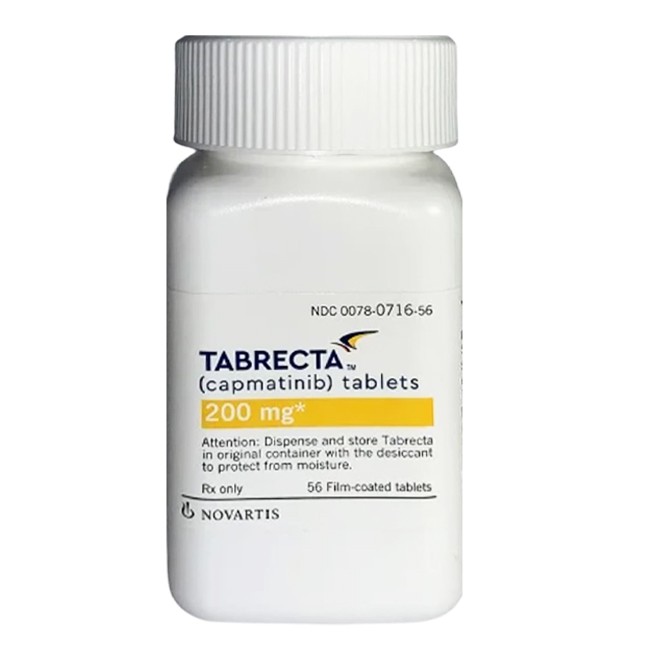
Capmatinib is a MET kinase inhibitor indicated for the treatment of adult patients with metastatic non-small cell lung cancer harboring a mutation that leads to MET exon 14 skipping. The following explains patient selection, standard dosing, and dosage adjustments for adverse reactions.
1. Patient Selection and Pre-treatment Assessment
1. Indicated Population
Capmatinib is indicated for adult patients with metastatic non-small cell lung cancer confirmed to have a mutation that leads to MET exon 14 skipping by an FDA-approved test.
2. Testing Requirements
Tumor tissue or plasma specimens should be tested preferentially.
If the mutation is not detected in a plasma specimen, tumor tissue should be tested if feasible.
The testing method must be an FDA-approved companion diagnostic.
3. Pre-treatment Preparation
Confirm pregnancy status in females of reproductive potential.
Assess baseline liver function, pancreatic enzymes, and pulmonary symptoms.
Inform patients of the risk of photosensitivity reactions and contraceptive requirements.
2. Standard Dosing and Administration
1. Recommended Dose
400 mg orally twice daily.
May be taken with or without food.
Swallow tablets whole; do not break, crush, or chew.
2. Missed Dose and Vomiting
If a dose is missed or vomited, do not make up the dose.
Take the next dose at its scheduled time.
3. Monitoring
Monitor liver function, amylase, and lipase before and during treatment.
Watch for new or worsening pulmonary symptoms such as dyspnea, cough, and fever.
Monitor for skin photosensitivity reactions and advise sun protection.
3. Dosage Adjustments for Adverse Reactions
1. Dose Reduction Schedule
First reduction: 300 mg twice daily.
Second reduction: 200 mg twice daily.
Permanently discontinue in patients unable to tolerate 200 mg twice daily.
2. Interstitial Lung Disease/Pneumonitis
Permanently discontinue capmatinib for any grade.
3. Hepatotoxicity
Increased transaminases without increased bilirubin: withhold for Grade 3, then resume at the same dose or a reduced dose as appropriate after recovery; permanently discontinue for Grade 4.
Increased transaminases with increased bilirubin: permanently discontinue.
Isolated increased bilirubin: withhold for Grade 2, then resume at the same dose or a reduced dose after recovery; withhold for Grade 3, then resume at a reduced dose or permanently discontinue after recovery; permanently discontinue for Grade 4.
4. Pancreatic Toxicity
Grade 3 increased lipase or amylase: withhold until recovery to ≤ Grade 2 or baseline; resume at a reduced dose if recovered within 14 days, otherwise permanently discontinue.
Grade 4 or pancreatitis: permanently discontinue.
5. Hypersensitivity Reactions
Withhold capmatinib if hypersensitivity is suspected, until symptoms resolve.
Permanently discontinue in patients who develop serious hypersensitivity reactions.
6. Other Adverse Reactions
Grade 2: maintain the current dose; if intolerable, withhold and resume at a reduced dose after resolution.
Grade 3: withhold, then resume at a reduced dose after resolution.
Grade 4: permanently discontinue.
7. Special Populations
No dosage adjustment is needed for mild to moderate renal impairment.
Severe renal impairment has not been studied.
No dosage adjustment is needed for elderly patients.
Breastfeeding women should stop breastfeeding during treatment and for 1 week after the last dose.

Free Inquiry











