info@seagull-health.com
SeagullHealth
语言:
search
new
Contraindications and Adverse Reactions of Capmatinib
508
Article source: Seagull Pharmacy
Oct 09, 2026

Capmatinib is used for metastatic non-small cell lung cancer with a mutation that leads to MET exon 14 skipping. It has no absolute contraindications, but several adverse reactions require close monitoring and dosage adjustment. The following explains three aspects.

1. Contraindications and Use Restrictions

1. No Absolute Contraindications

The prescribing information states that capmatinib has no contraindications.

However, this does not mean all patients can use it safely; assessment based on individual circumstances is required.

2. Restrictions in Special Populations

Pregnant women: may cause fetal harm; contraindicated.

Breastfeeding women: do not breastfeed during treatment and for 1 week after the last dose.

Children: safety and effectiveness have not been established.

Severe renal impairment: not studied; not recommended.

3. Concomitant Medications to Avoid

Strong or moderate CYP3A inducers: avoid concomitant use, otherwise efficacy may be reduced.

Strong CYP3A inhibitors: monitor adverse reactions closely.

St. John's wort: do not use concomitantly.

4. Contraception Requirements

Females of reproductive potential should use effective contraception during treatment and for 1 week after the last dose.

Male patients with female partners of reproductive potential should also use contraception until 1 week after the last dose.

2. Adverse Reactions Requiring Close Monitoring

1. Interstitial Lung Disease/Pneumonitis

Can be fatal and is one of the most serious adverse reactions.

Presentation: new or worsening respiratory symptoms such as dyspnea, cough, and fever.

Management: withhold immediately if suspected; permanently discontinue after ruling out other causes.

2. Hepatotoxicity

Presents as elevated transaminases and bilirubin.

Monitoring: check liver function regularly before and during treatment.

Management: withhold, reduce dose, or permanently discontinue based on severity.

3. Pancreatic Toxicity

Presents as elevated amylase and lipase; severe cases may develop pancreatitis.

Monitoring: test regularly at baseline and during treatment.

Management: withhold for Grade 3, then reduce dose after recovery; permanently discontinue for Grade 4 or pancreatitis.

4. Hypersensitivity Reactions

Presentation: fever, chills, pruritus, rash, decreased blood pressure, nausea, and vomiting.

Management: withhold if suspected; permanently discontinue in severe cases.

5. Photosensitivity Reactions

Animal studies suggest a risk of photosensitivity.

Recommendation: use sun protection during treatment and limit ultraviolet exposure.

6. Embryo-Fetal Toxicity

Animal studies show it can cause malformations.

Recommendation: contraindicated in pregnancy; strict contraception for people of reproductive potential.

3. Common Adverse Reactions and Dosage Adjustment

1. Common Adverse Reactions

Edema, nausea, musculoskeletal pain, and fatigue.

Vomiting, dyspnea, cough, and decreased appetite.

Others: constipation, diarrhea, rash, dizziness, fever, and weight loss.

2. Dose Reduction Schedule

First reduction: 300 mg twice daily.

Second reduction: 200 mg twice daily.

Permanently discontinue in patients unable to tolerate 200 mg twice daily.

3. Hepatotoxicity Dosage Adjustment

Increased transaminases without increased bilirubin: withhold for Grade 3; if recovered within 7 days, resume at the same dose; otherwise reduce dose; permanently discontinue for Grade 4.

Increased transaminases with increased bilirubin: permanently discontinue.

Isolated increased bilirubin: withhold for Grade 2, then resume at the same dose or a reduced dose after recovery; withhold for Grade 3, then resume at a reduced dose or permanently discontinue after recovery; permanently discontinue for Grade 4.

4. Pancreatic Toxicity Dosage Adjustment

Grade 3 increased lipase or amylase: withhold until recovery to ≤ Grade 2 or baseline; reduce dose if recovered within 14 days, otherwise permanently discontinue.

Grade 4 or pancreatitis: permanently discontinue.

5. Adjustment for Other Adverse Reactions

Grade 2: maintain dose; if intolerable, withhold, then reduce dose after resolution.

Grade 3: withhold, then reduce dose after resolution.

Grade 4: permanently discontinue.

6. Key Patient Education Points

Seek medical attention immediately for new or worsening respiratory symptoms.

Seek medical attention immediately for symptoms of liver injury or pancreatitis.

Avoid ultraviolet exposure during treatment and use sun protection.

Inform the doctor of all concomitant medications and supplements.

Note: For internal discussion among medical personnel only. For specific medication, please consult the attending physician. Drug information may change over time. For the latest information, we recommend adding a medical consultant or consulting for free online.
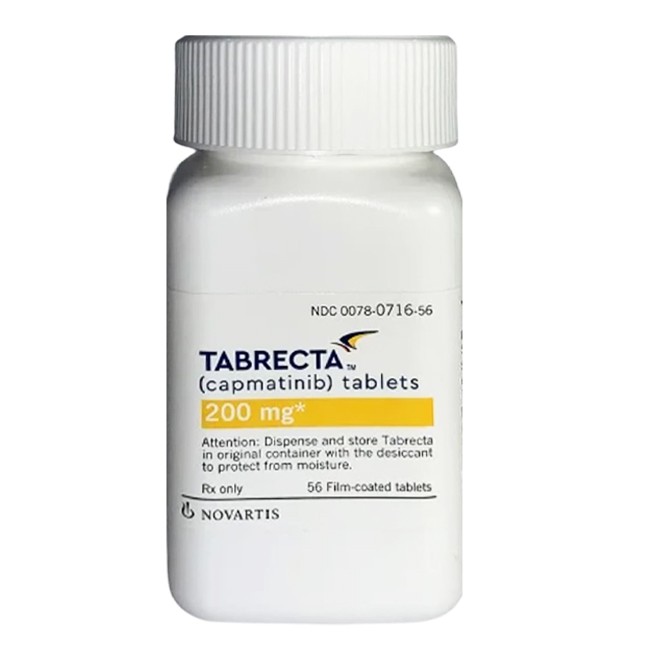
Capmatinib(Tabrecta)
Treatment of metastatic non-small cell lung cancer (NSCLC) with MET exon 14...
WeChat Scan
Free Inquiry
Recommended Articles
Dietary precautions for patients with Capmatinib
Capmatinib may be taken with or without food, but dietary components, dosing habits, and concomitant medications can directly affect efficacy and safety. The following explains administration, dietary...
Usage and dosage of Capmatinib
Capmatinib is a MET kinase inhibitor indicated for the treatment of adult patients with metastatic non-small cell lung cancer harboring a mutation that leads to MET exon 14 skipping. The following exp...
Side effects and adverse reactions of Pacritinib
Pacritinib is used to treat myelofibrosis with low platelets. During treatment, various adverse reactions may occur, and monitoring should focus on bleeding, gastrointestinal, and cardiovascular event...
Dietary precautions for patients with Pacritinib
During oral treatment with pacritinib, diet is closely related to the method of administration, gastrointestinal reactions, and concomitant medications. Patients should pay attention to the following ...
Precautions for healthy diet of patients with Epclusa
During treatment with Epclusa, there are no special dietary restrictions, but a reasonable diet can help reduce discomfort and ensure efficacy. The following explains from three aspects.I. Administrat...
Special population use of Epclusa
Epclusa requires no dosage adjustment in most special populations, but some populations require careful evaluation. The following explains three situations separately.I. Populations with Abnormal Live...
Contraindications and adverse reactions of Epclusa
Epclusa is generally well tolerated, but contraindications and adverse reactions require special attention when combined with ribavirin. The following explains from three aspects.I. Contraindications1...
Precautions for healthy diet of patients with eltrombopag
When taking eltrombopag, diet directly affects drug absorption and efficacy. Mastering the correct dietary principles is an important part of ensuring safe and effective treatment.I. Timing of Medicat...
Related Articles
Contraindications and Adverse Reactions of Capmatinib
Capmatinib is used for metastatic non-small cell lung cancer with a mutation that leads to MET exon 14 skipping. It has no absolute contraindications, but several adverse reactions require close monit...
Dietary precautions for patients with Capmatinib
Capmatinib may be taken with or without food, but dietary components, dosing habits, and concomitant medications can directly affect efficacy and safety. The following explains administration, dietary...
Usage and dosage of Capmatinib
Capmatinib is a MET kinase inhibitor indicated for the treatment of adult patients with metastatic non-small cell lung cancer harboring a mutation that leads to MET exon 14 skipping. The following exp...
Guidelines for Adverse Effect Management and Storage of Capmatinib (Tabrecta)
While effectively inhibiting tumors, capmatinib (Tabrecta) may induce a variety of adverse reactions.I. Common Adverse Effects of Capmatinib1. Adverse effects with an incidence rate ≥ 20%The most freq...
Capmatinib (Tabrecta): Dosage, Precautions and Healthy Lifestyle Guidelines
Standardized medication is the cornerstone for the efficacy of capmatinib. Combined with scientific health management, it can reduce adverse reactions and improve quality of life.I. Dosage and Adminis...
Adverse Reactions of Capmatinib (Tabrecta)
Capmatinib (Tabrecta) is a highly selective MET kinase inhibitor that has become an important targeted therapy for the treatment of metastatic non-small cell lung cancer (NSCLC) harboring MET exon 14 ...
What Are the Precautions for Capmatinib (Tabrecta) Administration?
Capmatinib (Tabrecta) is a highly selective MET inhibitor that offers a precision treatment option for patients with metastatic non-small cell lung cancer (NSCLC) harboring MET exon 14 skipping mutati...
Dosage and Administration, Recommended Dose of Capmatinib (Tabrecta)
Capmatinib (Tabrecta) is the world’s first approved targeted therapy for metastatic non-small cell lung cancer (NSCLC) harboring MET exon 14 skipping mutations. Rational administration of this medicat...
New Drugs
Cenobamate(Xcopri)
Cenobamate(Xcopri)
It is used for the treatment of partial-onset seizures in adults (with or...
Infigratinib(Truseltiq)
Treatment of previously treated, unresectable locally advanced or metastatic...
Opicapone(Ongentys)
Opicapone(Ongentys)
Adjunctive treatment to levodopa/carbidopa for reducing "off" episodes in...
Deflazacort(Emflaza)
Treatment of Duchenne muscular dystrophy (DMD) in patients aged 2 years and...
Counselling Service
Global Drug Search
Clinical Research Recruitment
Overseas Medical Treatment
Remote Consultations
Note: Our medical consultant will contact you as soon as possible. We promise to strictly protect your privacy.
Submit
Business
  • Core products
  • Antitumor drugs
  • General drug
  • Antiviral drugs
  • Biological agents
Contact Us 
  • haiousales@gmail.com
Welcome to consult
Seagull Pharmacy.,Ltd All rights reserved