
info@seagull-health.com
SeagullHealth
语言:
search
new
Usage Guidelines for Selpercatinib
513
Article source: Seagull Pharmacy
Sep 21, 2026

The FDA prescribing information lists dosage forms including capsules (40 mg, 80 mg) and tablets (40 mg, 80 mg, 120 mg, 160 mg). Both dosage forms are bioequivalent and interchangeable.

1. Starting Dosage: Adults Based on Body Weight, Children Based on Body Surface Area

1) Adults and Pediatric Patients Aged 12 Years and Older (Based on Body Weight)

For patients weighing less than 50 kg, the recommended dosage is 120 mg orally twice daily; for patients weighing 50 kg or more, the recommended dosage is 160 mg orally twice daily.

2) Pediatric Patients Aged 2 to Less Than 12 Years (Based on Body Surface Area)

0.33 to 0.65 m²: 40 mg orally three times daily.

0.66 to 1.08 m²: 80 mg orally twice daily.

1.09 to 1.52 m²: 120 mg orally twice daily.

1.53 m² or greater: 160 mg orally twice daily.

Body surface area less than 0.33 m²: Not recommended.

Dosing for pediatric patients is based on body surface area because children have a wide range of weights and significant body shape differences, making body surface area a better reflector of drug distribution than weight alone.

2. General Principles for Dose Modifications

When adverse reactions occur, physicians will lower the dosage step by step according to the following pathways:

Current dose of 160 mg twice daily: First reduction to 120 mg twice daily; second reduction to 80 mg twice daily; third reduction to 40 mg twice daily.

Current dose of 120 mg twice daily: First reduction to 80 mg twice daily; second reduction to 40 mg twice daily; third reduction to 40 mg once daily.

Current dose of 80 mg twice daily: First reduction to 40 mg twice daily; second reduction to 40 mg once daily; third step is permanent discontinuation.

Current dose of 40 mg three times daily: First reduction to 40 mg twice daily; second reduction to 40 mg once daily; third step is permanent discontinuation.

3. Administration Guidelines

1. Swallow whole; do not crush or chew. This applies to both capsules and tablets.

2. May be taken with or without food. High-fat meals do not affect the absorption of this drug, so special dietary restrictions or fasting are not required.

3. If you are concurrently taking a proton pump inhibitor (PPI), this medication must be taken with food.

4. For patients who cannot swallow whole or who use a feeding tube, a specific dispersion administration procedure must be followed. FDA prescribing information restriction: Only the 40 mg tablets can be used to prepare a suspension; other strengths must not be used.

4. Administration for Patients with Swallowing Difficulties

1) Oral Administration

Place the required number of 40 mg tablets for the prescribed dose (1, 2, 3, or 4 tablets) into a glass or medicine cup. Add approximately 1 tablespoon (15 mL) of room-temperature or refrigerated water, or 100% pureed carrots.

Stir intermittently until the tablets disperse (about 7 to 10 minutes). Sediment or cloudiness may appear when using water, which is normal.

Administer the full mixture immediately. Add another tablespoon (15 mL) of water to the cup, swirl or stir to gather any remaining medication, and consume immediately.

Discard if not administered within 2 hours of preparation.

2) Administration via Feeding Tube (Gastric or Nasogastric Tube)

Use polyurethane tubes (French size 8 or larger), polyvinyl chloride tubes (French size 10 or larger), or silicone gastric tubes (French size 14 or larger).

Place the required number of 40 mg tablets into at least 10 mL of room-temperature water and stir intermittently for about 7 to 10 minutes until dispersed.

Flush the feeding tube according to the manufacturer instructions first. Draw the suspension into an enteral syringe and immediately administer through the tube. Add 5 mL of water, swirl to gather remaining medication, and administer through the tube in the same manner.

Repeat flushing as necessary to ensure complete dose delivery. Finally, flush the feeding tube again following manufacturer instructions. Discard if not administered within 2 hours of preparation.

Note: For internal discussion among medical personnel only. For specific medication, please consult the attending physician. Drug information may change over time. For the latest information, we recommend adding a medical consultant or consulting for free online.
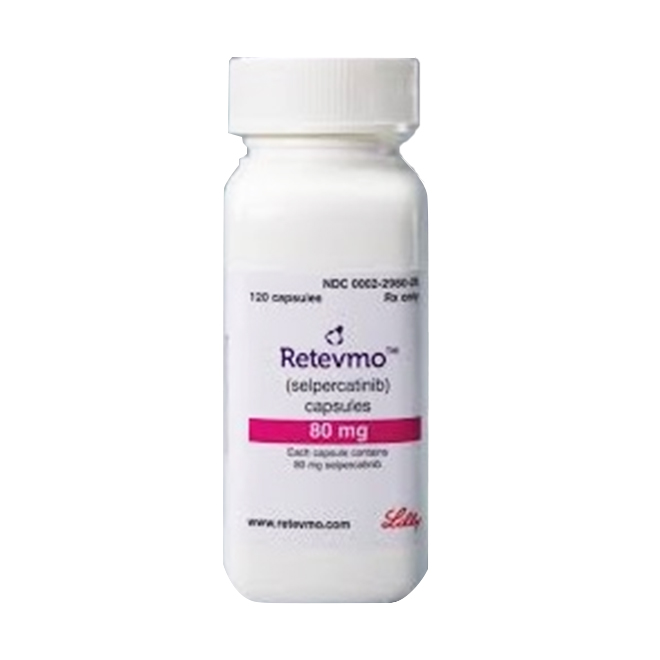
Selpercatinib(Retevmo)
Adults with locally advanced or metastatic non-small cell lung cancer (NSCLC)...
WeChat Scan
Free Inquiry
Recommended Articles
What kind of medicine is Selpercatinib?
Selpercatinib is the world's first approved highly selective RET inhibitor, first approved in the United States in May 2020 and officially launched in mainland China in September 2022.Indications ...
Side Effects and Adverse Reactions of Cenobamate
Cenobamate is used for the treatment of partial-onset seizures in adults. Its overall tolerability is acceptable, but vigilance regarding serious adverse reactions and common side effects is still nec...
Precautions for the Use of Cenobamate
Cenobamate is used for the treatment of partial-onset seizures in adults, and standardized medication use is the key to ensuring efficacy and safety.I. Dosage, Administration, and Titration Principles...
The therapeutic effects of octopaine
Opicapone is an adjunctive medication for the treatment of Parkinson's disease. It primarily works by inhibiting the COMT enzyme to prolong the duration of action of levodopa, thereby reducing mot...
What are the side effects of Selpercatinib?
Common side effects of Selpercatinib include musculoskeletal pain, edema, diarrhea, fatigue, dry mouth, and hypertension. Different measures are taken depending on the severity of the side effects.Com...
Side effects and adverse reactions of Vadadustat
Vadadustat is used for anemia in chronic kidney disease patients on dialysis, but it may cause serious adverse reactions such as thrombosis, liver injury, and increased blood pressure, requiring close...
Precautions for the use of Vadadustat
Vadadustat is used for anemia in adults with chronic kidney disease who have been on dialysis for at least three months, and its use requires vigilance for risks such as thrombosis, liver injury, and ...
Storage environment for Vadadustat
The storage of vadadustat requires attention to temperature, packaging, and storage safety, and proper storage can ensure stable drug efficacy. The following is explained from three aspects: temperatu...
Related Articles
What are the side effects of Selpercatinib?
Common side effects of Selpercatinib include musculoskeletal pain, edema, diarrhea, fatigue, dry mouth, and hypertension. Different measures are taken depending on the severity of the side effects.Com...
Usage Guidelines for Selpercatinib
The FDA prescribing information lists dosage forms including capsules (40 mg, 80 mg) and tablets (40 mg, 80 mg, 120 mg, 160 mg). Both dosage forms are bioequivalent and interchangeable.1. Starting Dos...
What kind of medicine is Selpercatinib?
Selpercatinib is the world's first approved highly selective RET inhibitor, first approved in the United States in May 2020 and officially launched in mainland China in September 2022.Indications ...
Selpercatinib (Retevmo): Dosage, Precautions, and Healthy Living
Selpercatinib (Retevmo) is an oral, precision-targeted antineoplastic agent that selectively inhibits the RET driver gene.I. Dosage and Administration1. Adults and Adolescents Aged 12 Years and OlderD...
Selpercatinib (Retevmo): Side Effects, Management Strategies, and Storage Guidelines
Selpercatinib (Retevmo) demonstrates significant efficacy in the treatment of various RET-driven tumors, yet it may also induce a range of adverse reactions.I. Common Side Effects1. Common Adverse Rea...
Side Effects of Selpercatinib (Retevmo)
Selpercatinib (Retevmo) is an oral, selective RET kinase inhibitor, indicated for the treatment of non‑small cell lung cancer, medullary thyroid carcinoma, and other thyroid cancers with RET gene fusi...
What are the precautions for the use of Selpercatinib (Retevmo)?
Selpercatinib (Retevmo) is a kinase inhibitor indicated for non-small cell lung cancer, medullary thyroid carcinoma, and thyroid cancer positive for RET gene fusion or mutation.What are the precaution...
What are the precautions for the use of Selpercatinib(Retevmo)?
As an oral targeted drug, Selpercatinib is easy to use and has high patient compliance. By inhibiting RET kinase activity, Selpercatinib effectively blocks the abnormal growth and spread of ...
New Drugs
Cenobamate(Xcopri)
Cenobamate(Xcopri)
It is used for the treatment of partial-onset seizures in adults (with or...
Infigratinib(Truseltiq)
Treatment of previously treated, unresectable locally advanced or metastatic...
Opicapone(Ongentys)
Opicapone(Ongentys)
Adjunctive treatment to levodopa/carbidopa for reducing "off" episodes in...
Deflazacort(Emflaza)
Treatment of Duchenne muscular dystrophy (DMD) in patients aged 2 years and...
Counselling Service
Global Drug Search
Clinical Research Recruitment
Overseas Medical Treatment
Remote Consultations
Note: Our medical consultant will contact you as soon as possible. We promise to strictly protect your privacy.
Submit
Business
  • Core products
  • Antitumor drugs
  • General drug
  • Antiviral drugs
  • Biological agents
Contact Us 
  • haiousales@gmail.com
Welcome to consult
Seagull Pharmacy.,Ltd All rights reserved






