

Proper administration of enasidenib, avoidance of treatment risks, and adoption of a healthy lifestyle are critical to enhancing therapeutic efficacy and ensuring safety.
1. Dosage and Administration
1.1 Standard Recommended Dosage
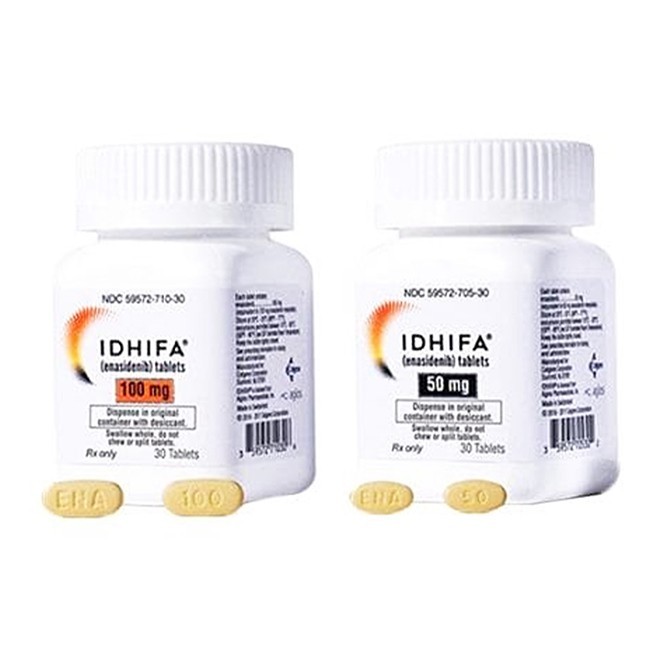
(1) The recommended dose of enasidenib is 100 mg taken orally once daily, with or without food.
(2) Treatment should be continued until disease progression or unacceptable toxicity occurs.
(3) In the absence of the above, treatment should be administered for at least 6 months to allow sufficient time for clinical response.
1.2 Administration Instructions
(1) Swallow tablets whole; do not chew, split, or crush.
(2) Take at approximately the same time each day to maintain stable plasma concentrations.
(3) Administer with a full glass of water (approximately 240 mL).
1.3 Management of Missed Dose or Vomiting
(1) If a dose is missed or vomiting occurs after dosing, take the missed dose as soon as possible on the same day. Resume the normal schedule the next day.
(2) Do not take two doses at one time to make up for a missed dose.
2. Precautions
2.1 Mandatory IDH2 Mutation Testing Prior to Treatment
(1) Enasidenib is only indicated for patients with IDH2 mutation-positive disease.
(2) Mutational status in blood or bone marrow must be confirmed using an FDA-approved companion diagnostic test (e.g., Abbott RealTime IDH2 Assay).
2.2 Monitoring Requirements
Prior to initiation and every 2 weeks for at least the first 3 months of treatment, monitor:
(1) Complete blood count (CBC) (to assess leukocytosis).
(2) Serum chemistry (to evaluate for tumor lysis syndrome (TLS), focusing on uric acid, potassium, calcium, and phosphorus).
(3) Hepatic function (bilirubin, transaminases).
2.3 Embryo-Fetal Toxicity
(1) Enasidenib can cause fetal harm. Pregnancy status must be verified in females of reproductive potential prior to treatment.
(2) Females: Use effective non-hormonal contraception during treatment and for 2 months after the final dose (hormonal contraceptives may be ineffective).
(3) Males: Use effective contraception during treatment and for 2 months after the final dose when partnering with females of reproductive potential.
(4) Animal studies indicate potential impairment of fertility; reversibility is unknown.
2.4 Lactation
(1) Breastfeeding is not recommended.
(2) Discontinue breastfeeding during treatment and for 2 months after the last dose.
3. Healthy Lifestyle Guidelines for Patients
3.1 Dietary Recommendations
(1) Reduce caffeine: Avoid excessive coffee, strong tea, cola, and energy drinks during treatment, especially if caffeine-sensitive.
(2) Adequate hydration: Drink 2000–3000 mL of fluid daily (if cardiac and renal function permits) to help prevent tumor lysis syndrome.
(3) Manage nausea and anorexia: Eat small, frequent meals; choose bland, nutrient-dense foods; avoid greasy and spicy foods.
(4) Manage diarrhea: Replenish fluids and electrolytes; consume easily digestible foods such as bananas and plain congee.
3.2 Symptom Self-Monitoring
Promptly report the following to your healthcare provider:
(1) Fever, cough, or difficulty breathing (alert for differentiation syndrome).
(2) Weight gain of more than 10 lbs (≈4.5 kg) in one week, or swelling of the arms/legs.
(3) Bone pain or swelling in the neck, groin, or armpits.
(4) Yellowing of the skin or whites of the eyes (elevated bilirubin, usually not due to liver injury, but must be reported).
3.3 Daily Management
(1) Take medication at a fixed time daily; set an alarm as a reminder.
(2) Store in the original bottle with the cap tightly closed and desiccant included. Keep at room temperature (20–25°C) and protect from moisture.
(3) Inform all healthcare providers of enasidenib use, especially before prescribing new medications or performing surgery.
(4) Avoid hormonal contraceptives; use non-hormonal methods (e.g., condoms, intrauterine devices).

Free Inquiry