info@seagull-health.com
SeagullHealth
语言:
search
new
Dosage and Administration, Precautions, and Healthy Lifestyle for Cenobamate
507
Article source: Seagull Pharmacy
Apr 03, 2026

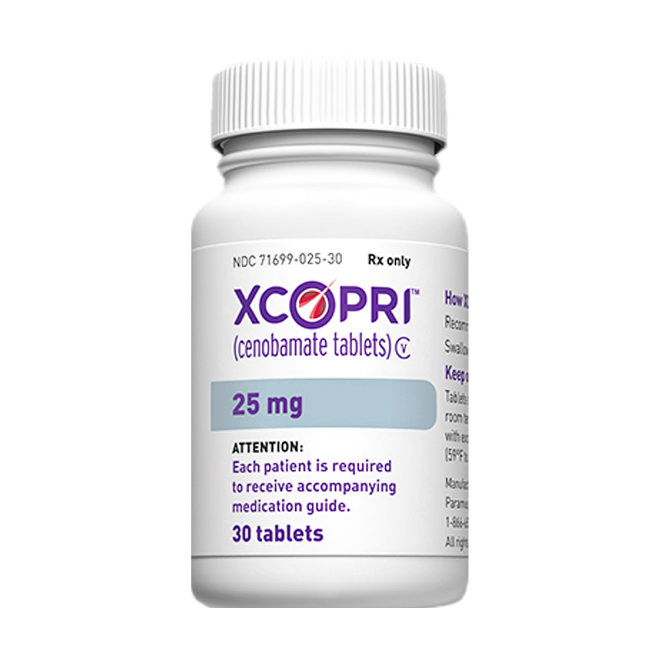
Cenobamate is a novel once-daily oral antiepileptic drug. Correct dosage and administration, strict adherence to precautions, and a healthy lifestyle are critical to ensuring its efficacy and safety.

I. Dosage and Administration of Cenobamate

1. Pre-Treatment Assessment

(1) Prior to initiation, if liver function tests have not been performed within the last 3 months, serum transaminases (ALT and AST) and total bilirubin must be measured to establish a baseline.

(2) Dose adjustment is required in patients with concomitant hepatic impairment.

2. Recommended Initiation and Titration Schedule

This product is administered orally once daily, with or without food. Rapid dose escalation is strictly prohibited. The specific regimen is as follows:

(1) Weeks 1–2: 12.5 mg once daily (starting dose).

(2) Weeks 3–4: 25 mg once daily.

(3) Weeks 5–6: 50 mg once daily.

(4) Weeks 7–8: 100 mg once daily.

(5) Weeks 9–10: 150 mg once daily.

(6) Week 11 and beyond: 200 mg once daily (maintenance dose).

(7) If clinically necessary and well-tolerated, the dose may be further increased from 200 mg, by 50 mg increments every two weeks, to a maximum of 400 mg once daily.

3. Dose Adjustment in Patients with Hepatic Impairment

(1) Mild to moderate hepatic impairment (Child-Pugh Class A or B): Maximum recommended dose is 200 mg once daily; further dose reduction may be considered.

(2) Severe hepatic impairment (Child-Pugh Class C): Use is not recommended.

4. Administration Instructions

(1) Tablets may be swallowed whole or crushed.

(2) Crushed tablets should be mixed with 25 mL of water and administered immediately orally (as a suspension) or via nasogastric tube.

(3) The crushed tablet-water mixture must not be stored and should be used immediately.

5. Discontinuation

Unless rapid discontinuation is required due to severe adverse reactions, the dose should be gradually tapered over at least 2 weeks to reduce the risk of increased seizure frequency or status epilepticus.

II. Precautions for Cenobamate Use

1. Strict Adherence to Titration Rate

(1) Rapid dose escalation (weekly or faster) can cause DRESS syndrome, with fatal cases reported.

(2) The dose must be increased strictly every two weeks; do not accelerate the titration rate.

2. Liver Function Monitoring

(1) Seek immediate medical attention for liver function tests if unexplained nausea, vomiting, right upper abdominal pain, fatigue, anorexia, jaundice, or dark urine develops during treatment.

(2) Treatment should be interrupted or discontinued if transaminases exceed 3 times the upper limit of normal (ULN) and total bilirubin exceeds 2 times the ULN.

3. Vigilance for DRESS Syndrome

(1) DRESS presents with fever, rash, lymphadenopathy, facial swelling, and may be associated with hepatitis, nephritis, myocarditis, etc.

(2) Be alert for fever or lymphadenopathy even in the absence of rash. Discontinue immediately if DRESS is suspected.

4. Avoid Driving and Operating Machinery

(1) This product may cause somnolence, dizziness, fatigue, blurred vision, and balance disturbances.

(2) Do not drive or operate hazardous machinery until you know how the medication affects you.

5. Avoid Alcohol and Other CNS Depressants

Alcohol and other central nervous system (CNS) depressants (e.g., sedatives, hypnotics) may exacerbate somnolence and sedation; concomitant use should be avoided during treatment.

6. Cardiac Effects

(1) This product may shorten the QT interval. Seek prompt medical attention for persistent palpitations or syncope.

(2) Use caution when co-administering other drugs that shorten the QT interval (e.g., certain antiarrhythmics).

7. Suicide Risk Monitoring

(1) Antiepileptic drugs may increase the overall risk of suicidal ideation and behavior.

(2) Patients and caregivers should watch for sudden mood changes, worsening depression, anxiety, agitation, aggressive behavior, or suicidal thoughts. Contact a physician immediately if any abnormalities occur.

8. Reduced Efficacy of Oral Contraceptives

Women of childbearing potential using oral contraceptives must use additional non-hormonal contraceptive methods (e.g., condoms, intrauterine devices).

III. Healthy Lifestyle for Patients Taking Cenobamate

1. Consistent Medication Adherence

(1) Take the medication at the same time each day to avoid missed doses.

(2) If a dose is missed and the next scheduled dose is more than 12 hours away, take the missed dose immediately. If it is nearly time for the next dose, skip the missed dose. Do not double the dose.

2. Adequate Rest and Avoidance of Fatigue

(1) Fatigue lowers the seizure threshold and may exacerbate drug-related somnolence and asthenia.

(2) Maintain a regular sleep schedule; avoid staying up late and overexertion.

3. Abstinence from Alcohol

(1) Alcohol not only intensifies CNS depression but may also trigger seizures.

(2) Complete abstinence from alcohol is strongly recommended during treatment.

4. Safety Precautions

(1) Due to the high risk of dizziness and balance disturbances, the home environment should be modified to reduce fall risks (e.g., keep floors dry, install handrails).

(2) Use a shower chair when bathing and avoid climbing alone.

5. Regular Follow-Ups

(1) Undergo regular monitoring of liver function, serum potassium, ECG, and neurological status as directed by your physician.

(2) Do not reduce or discontinue the dose without medical advice.

Note: For internal discussion among medical personnel only. For specific medication, please consult the attending physician. Drug information may change over time. For the latest information, we recommend adding a medical consultant or consulting for free online.
Recommended Articles
Side Effects of Cenobamate and Management Strategies
Cenobamate is an effective novel antiepileptic drug, but it is associated with a range of side effects.I. Side Effects of Cenobamate1. Most Common Side Effects (Incidence ≥10% and higher than placebo)...
Safinamide (Xadago): Domestic Launch and Purchase Guide in China
As an adjunctive treatment for Parkinson’s disease, the accessibility of safinamide in China is a major concern for patients.I. Domestic Launch Status1. Not Yet Launched in Chinese Mainland(1) As of A...
Analysis of the Therapeutic Value and Accessibility of Safinamide (Xadago)
As an adjunctive treatment for "off" episodes in Parkinson’s disease, safinamide’s clinical efficacy, medical insurance coverage, and pricing are common concerns for patients and their famil...
Dosage and Administration, Precautions, and Healthy Living Guidelines for Anagrelide (Agrylin)
Anagrelide is a prescription platelet-lowering medication that must be used precisely under the guidance of a physician.I. Dosage and Administration1. Adult Starting Dose(1) The recommended starting d...
Enasidenib: Side Effects, Management Strategies, and Storage Guidelines
While treating IDH2-mutant acute myeloid leukemia (AML), enasidenib may cause various adverse reactions.I. Common Side Effects of Enasidenib1. Adverse Reactions with an Incidence Rate ≥ 20%Based on cl...
Enasidenib: Dosage, Precautions, and Healthy Lifestyle Guidelines
Proper administration of enasidenib, avoidance of treatment risks, and adoption of a healthy lifestyle are critical to enhancing therapeutic efficacy and ensuring safety.1. Dosage and Administration1....
Complete Analysis of Enasidenib: Mechanism of Action, Drug Interactions, and Missed Dose Management
Enasidenib is an oral targeted therapy indicated for relapsed or refractory acute myeloid leukemia with IDH2 mutations.I. What is Enasidenib?1. Drug Profile(1) Enasidenib (brand name: IDHIFA) is an is...
​Enasidenib: Indications, Contraindications, and Dosage Guidelines for Special Populations
Enasidenib is a targeted agent against IDH2 mutations, used for the precise treatment of specific types of acute myeloid leukemia.I. Indications: Precision Targeting of IDH2 Mutations1. Sole Indicatio...
Related Articles
Side Effects, Management and Storage Guidelines for Sacubitril/Valsartan Sodium Tablets (Entresto)
Sacubitril/valsartan sodium tablets are highly effective in treating heart failure and hypertension, but like all medications, they may also cause some side effects.I. What are the common side effects...
Sacubitril Valsartan Sodium Tablets (Entresto): Indications, Contraindications, and Use in Special Populations
Sacubitril/Valsartan sodium tablets are indicated for chronic heart failure in adults and children, as well as for hypertension in adults. However, a thorough evaluation of contraindications and speci...
Tenapanor (Xphozah) Medication Guide: Dosage, Precautions, and Healthy Living
Tenapanor (Xphozah) is used to lower serum phosphorus in adult dialysis patients and must be strictly used according to the dosage and administration instructions.I. Dosage and Administration1. Recomm...
Xphozah (Tinapano) Side Effect Management and Storage Guidelines
Tenapanor (Xphozah) is used to lower serum phosphorus in dialysis patients, with the most common side effect being diarrhea. Correctly identifying side effects, mastering mitigation methods, and stori...
Side Effects, Mitigation Methods and Storage Guidelines for Lecanemab (Leqembi)
Lecanemab (Leqembi) can cause various side effects while treating early Alzheimer's disease.I. What are the common side effects?1. Infusion-related reactions(1) Occur in approximately 26% of patie...
Dosage and Administration, Precautions, and Healthy Lifestyle for Lecanemab (Leqembi)
Lecanemab (Leqembi) must be used under professional medical guidance. Adherence to prescribed medication and a healthy lifestyle can better ensure treatment efficacy and safety.I. Dosage and Administr...
What are the side effects of Urocalun?
Urocalun, a commonly used drug to promote the expulsion of kidney and ureteral stones, has a good overall safety profile but may still cause some side effects.I. What are the side effects of Urocalun?...
Urocalun: Indications, Contraindications, and Medication Precautions for Special Populations
Urocalun is a urinary calculus therapeutic agent extracted from the leaves and branches of Quercus stenophylla. Clarifying its indications, contraindications, and special population precautions is ess...
New Drugs
Infigratinib(Truseltiq)
Treatment of previously treated, unresectable locally advanced or metastatic...
Opicapone(Ongentys)
Opicapone(Ongentys)
Adjunctive treatment to levodopa/carbidopa for reducing "off" episodes in...
Deflazacort(Emflaza)
Treatment of Duchenne muscular dystrophy (DMD) in patients aged 2 years and...
Faricimab-svoa(Vabysmo)
Treatment of neovascular age-related macular degeneration, diabetic macular...
Counselling Service
Global Drug Search
Clinical Research Recruitment
Overseas Medical Treatment
Remote Consultations
Note: Our medical consultant will contact you as soon as possible. We promise to strictly protect your privacy.
Submit
Business
  • Core products
  • Antitumor drugs
  • General drug
  • Antiviral drugs
  • Biological agents
Contact Us 
  • haiousales@gmail.com
Welcome to consult
Seagull Pharmacy.,Ltd All rights reserved