
info@seagull-health.com
SeagullHealth
语言:
search
new
Contraindications and adverse reactions of Alpelisib
512
Article source: Seagull Pharmacy
Oct 28, 2026

Alpelisib is used for specific breast cancer treatment. The contraindicated population should be identified before medication, and multiple adverse reactions should be monitored during treatment. The following explains three aspects: contraindications, common adverse reactions, and serious adverse reactions.

I. Contraindications and Pre-treatment Assessment

1. Contraindicated in patients with severe allergy

Use is prohibited in patients who have had a severe allergic reaction to alpelisib or any of its components. A detailed allergy history should be obtained before medication.

2. Manifestations of severe allergic reactions

These include dyspnea, flushing, rash, fever, tachycardia, and others; severe cases may develop angioedema or even anaphylactic shock. Once a severe allergic reaction occurs, alpelisib should be permanently discontinued and immediate treatment should be initiated.

3. Baseline conditions to assess before medication

Before treatment, fasting blood glucose and HbA1c should be tested and blood glucose optimized; pregnancy status should be confirmed in females of reproductive potential; and history of skin reactions, lung disease, and concomitant medications should be reviewed.

4. Contraindicated concomitant medications

Concomitant use with strong CYP3A4 inducers should be avoided to prevent reduced efficacy; concomitant use with BCRP inhibitors should be avoided to prevent increased toxicity. If alternatives are unavailable, close monitoring is required.

II. Common Adverse Reactions and Management

1. Hyperglycemia

Alpelisib can cause elevated blood glucose, sometimes severe. Blood glucose should be optimized before treatment, and fasting blood glucose and HbA1c should be monitored regularly during treatment; metformin may be considered in advance based on risk. If hyperglycemia occurs, glucose-lowering treatment should be adjusted according to severity, and alpelisib may need to be interrupted, reduced, or discontinued.

2. Diarrhea or colitis

Diarrhea is relatively common and, when severe, can cause dehydration and acute kidney injury. Patients should start antidiarrheal medication early, increase oral fluid intake, and inform their doctor promptly. Symptoms of colitis such as abdominal pain, mucus, or blood in stool require vigilance, and severe cases may require steroid treatment.

3. Rash

Rash may present as maculopapular lesions, itching, and others, and severe cases may develop into serious cutaneous adverse reactions. Mild rash can be managed with topical corticosteroids and antihistamines; if a serious skin reaction is suspected, the medication should be interrupted and dermatology consultation should be requested.

4. Nausea, vomiting, and stomatitis

These can be relieved with symptomatic antiemetic treatment, oral care, and small, frequent meals; if symptoms are severe, dose adjustment should be evaluated.

5. Fatigue, decreased appetite, and weight loss

Nutritional support should be emphasized during treatment, weight changes should be monitored, and nutritional intervention should be provided when necessary.

6. Laboratory abnormalities

These may include increased creatinine, lymphocytopenia, decreased hemoglobin, elevated liver enzymes, elevated lipase, decreased blood calcium, prolonged coagulation indicators, and others. Regular follow-up testing should be performed as advised by the doctor.

III. Serious Adverse Reactions Requiring Vigilance

1. Serious cutaneous adverse reactions

These include Stevens-Johnson syndrome, erythema multiforme, toxic epidermal necrolysis, and DRESS syndrome. If fever, flu-like symptoms, mucosal lesions, progressive rash, or lymphadenopathy occur, the medication should be stopped immediately and medical attention should be sought; confirmed cases should permanently discontinue the drug.

2. Pneumonitis or interstitial lung disease

Cough, dyspnea, hypoxia, and others may occur. If pneumonitis is suspected, the medication should be interrupted immediately and the patient evaluated; confirmed cases should permanently discontinue the drug.

3. Severe hyperglycemia and ketoacidosis

A small number of patients may develop hyperosmolar hyperglycemic nonketotic syndrome or ketoacidosis, which require emergency management; patients with severe or recurrent hyperglycemia should adjust or discontinue alpelisib.

4. Allergic reactions and angioedema

Severe allergy requires permanent discontinuation and emergency management.

5. Others

Postmarketing adverse reactions such as uveitis have been reported. If vision changes, eye pain, or photophobia occur, medical attention should be sought promptly.

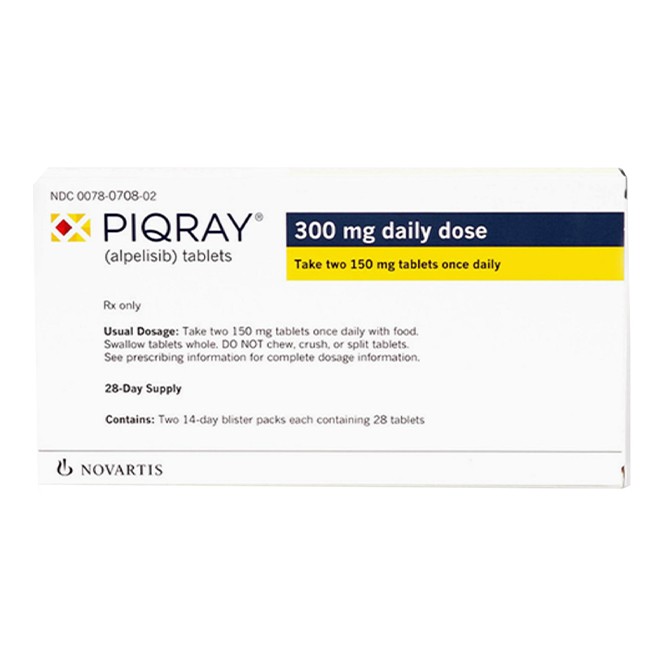
Note: For internal discussion among medical personnel only. For specific medication, please consult the attending physician. Drug information may change over time. For the latest information, we recommend adding a medical consultant or consulting for free online.
 Alpelisib(PIQRAY)
Alpelisib(PIQRAY)
PIQRAY is indicated in combination with fulvestrant for the treatment of...
WeChat Scan
Free Inquiry
Recommended Articles
Special population medication for Alpelisib
Alpelisib is used in specific breast cancer patients, and medication considerations vary among different populations. The following explains three aspects: pregnancy and lactation, older patients and ...
Healthy eating habits for Alpelisib patients
Alpelisib should be taken with food and may cause reactions such as hyperglycemia and diarrhea. A reasonable diet is an important part of supporting treatment and reducing discomfort. The following pr...
Contraindications and adverse reactions of capivasertib
Capivasertib is used for HR-positive, HER2-negative advanced breast cancer and PTEN-deficient metastatic prostate cancer. Contraindications must be ruled out before treatment, and during treatment, fo...
Special population use of Capivasortib
Capivasertib is used for HR-positive, HER2-negative advanced breast cancer and PTEN-deficient metastatic prostate cancer. Use in special populations requires individualized assessment, focusing on rep...
Precautions for the use of Dacomitinib
Dacomitinib is an oral targeted therapy for the first-line treatment of EGFR mutation-positive metastatic non-small cell lung cancer. Standardized administration and proactive monitoring are key to en...
Healthy eating habits for patients with Dacomitinib
During dacomitinib treatment, a reasonable diet helps maintain physical strength, alleviate discomfort such as diarrhea and decreased appetite, and improve quality of life when combined with standardi...
Contraindications and adverse reactions of Dacomitinib
Dacomitinib is used for the first-line treatment of EGFR mutation-positive metastatic non-small cell lung cancer. Although there is no absolute contraindication, its use is restricted in special popul...
The principle of action of Cabergoline
Cabergoline is an ergot derivative dopamine receptor agonist with high affinity for D2 receptors, exerting its therapeutic effect by directly inhibiting pituitary prolactin secretion. The following el...
Related Articles
Contraindications and adverse reactions of Alpelisib
Alpelisib is used for specific breast cancer treatment. The contraindicated population should be identified before medication, and multiple adverse reactions should be monitored during treatment. The ...
Special population medication for Alpelisib
Alpelisib is used in specific breast cancer patients, and medication considerations vary among different populations. The following explains three aspects: pregnancy and lactation, older patients and ...
Healthy eating habits for Alpelisib patients
Alpelisib should be taken with food and may cause reactions such as hyperglycemia and diarrhea. A reasonable diet is an important part of supporting treatment and reducing discomfort. The following pr...
What kind of medicine is Alpelisib?
Alpelisib is an oral phosphatidylinositol 3-kinase (PI3K) inhibitor that primarily inhibits the PI3Kα isoform. It is the world's first approved PI3Kα-selective inhibitor, first approved in the Uni...
Medication Guide for Alpelisib
Alpelisib is an oral PI3K inhibitor indicated in combination with fulvestrant for the treatment of adult patients with HR-positive, HER2-negative, PIK3CA-mutated, advanced or metastatic breast cancer....
How to Use Alpelisib (Piqray)
Alpelisib (Piqray) is a kinase inhibitor, first approved in the United States in 2019. Used in combination with fulvestrant, this medication provides an important targeted treatment option for patient...
What Kind of Drug Is Alpelisib (Piqray)?
Alpelisib (Piqray) is a kinase inhibitor, first approved in the United States in 2019. As a targeted therapy for specific types of advanced breast cancer, it exerts its effects by inhibiting the PI3Kα...
How to Purchase Alpelisib (Piqray)
Alpelisib (Piqray) is a phosphatidylinositol-3-kinase (PI3K) inhibitor. It is indicated for adult patients with hormone receptor (HR)-positive, human epidermal growth factor receptor 2 (HER2)-negative...
New Drugs
Cenobamate(Xcopri)
Cenobamate(Xcopri)
It is used for the treatment of partial-onset seizures in adults (with or...
Infigratinib(Truseltiq)
Treatment of previously treated, unresectable locally advanced or metastatic...
Opicapone(Ongentys)
Opicapone(Ongentys)
Adjunctive treatment to levodopa/carbidopa for reducing "off" episodes in...
Deflazacort(Emflaza)
Treatment of Duchenne muscular dystrophy (DMD) in patients aged 2 years and...
Counselling Service
Global Drug Search
Clinical Research Recruitment
Overseas Medical Treatment
Remote Consultations
Note: Our medical consultant will contact you as soon as possible. We promise to strictly protect your privacy.
Submit
Business
  • Core products
  • Antitumor drugs
  • General drug
  • Antiviral drugs
  • Biological agents
Contact Us 
  • haiousales@gmail.com
Welcome to consult
Seagull Pharmacy.,Ltd All rights reserved






