info@seagull-health.com
SeagullHealth
语言:
search
new
Precautions for Administration of Faricimab (Vabysmo)
517
Article source: Seagull Pharmacy
Oct 16, 2025

Faricimab (Vabysmo) is a bispecific antibody targeting vascular endothelial growth factor (VEGF) and angiopoietin-2 (Ang-2). It is indicated for the treatment of neovascular (wet) age-related macular degeneration (nAMD), diabetic macular edema (DME), and macular edema secondary to retinal vein occlusion (RVO).

Precautions for Administration of Faricimab (Vabysmo)

Administration Method

Administration Route: For intravitreal injection only and must be administered by a professional physician. Intravenous injection or rapid bolus injection is prohibited.

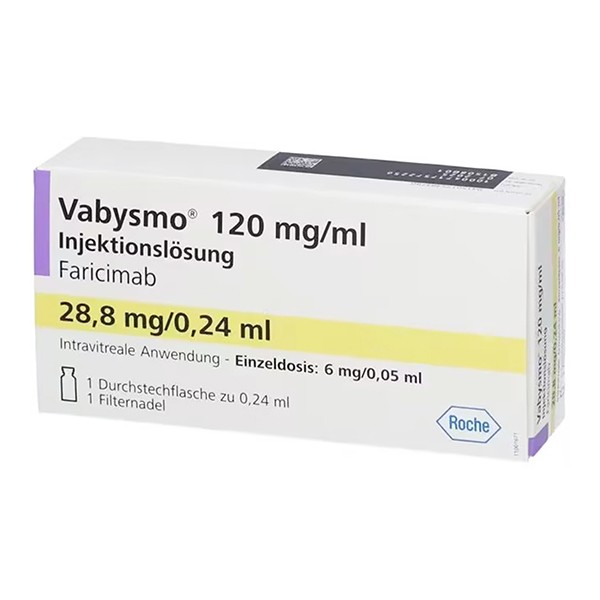
Preparation Selection: Two dosage forms are available—prefilled syringes and single-dose vials. Each contains 6 mg (0.05 mL of a 120 mg/mL solution) and is for single-eye use only. If the contralateral eye requires treatment, a full set of sterile devices must be replaced.

Contraindicated Populations

Patients with active ocular or periocular infections (e.g., conjunctivitis, endophthalmitis).

Patients with active intraocular inflammation (e.g., uveitis).

Patients with known hypersensitivity to faricimab or its excipients (which may present as rash, severe intraocular inflammation, etc.).

Pretreatment and Operational Specifications

Anesthesia and Disinfection: The procedure must be performed under sterile conditions, including surgical hand disinfection, sterile gloves, eyelid speculums, etc. A broad-spectrum antibacterial agent should be used before the operation.

Preventive Measures: Transient increase in intraocular pressure may occur within 60 minutes after injection. A sterile puncture needle must be prepared for emergency pressure reduction if needed.

Preparation Handling: Store under refrigeration (2°C–8°C). Before use, allow it to reach room temperature (20°C–25°C); freezing or shaking is strictly avoided.

The prefilled syringe must be used with the accompanying 30G filter needle. Before injection, expel all air bubbles and calibrate to the 0.05 mL mark.

Administration in Special Populations

Pregnancy and Lactation: Animal studies have shown embryotoxicity; the drug is contraindicated during pregnancy. Women of childbearing age must use contraception for 3 months after the last dose, and men must use contraception for 4 months after the last dose.

The safety of the drug during lactation is unknown; the risks and benefits should be carefully weighed.

Elderly Patients and Those with Hepatic/Renal Impairment: No dosage adjustment is required for patients aged ≥65 years, but close monitoring is necessary. Patients with mild to severe renal impairment also do not require dosage adjustment, while data on patients with severe impairment are limited.

Medication Monitoring for Faricimab (Vabysmo)

Infection and Inflammation Monitoring

Endophthalmitis/Retinal Detachment: Although the incidence is low, the consequences are severe. Vigilance is required for symptoms such as sudden vision loss, eye pain, and redness; prompt intervention is necessary.

Retinal Vasculitis/Vascular Occlusion: Rare but requires drug discontinuation; monitor changes in visual acuity.

Intraocular Pressure Increase: Transient elevation is common within 60 minutes after injection. Monitor optic nerve perfusion and perform puncture for pressure reduction if necessary.

Systemic Risks: The incidence of arterial thrombotic events (e.g., stroke, myocardial infarction) is comparable to that of control drugs, but attention should be paid to the potential risks of VEGF inhibitors.

Follow-Up Frequency

nAMD: Initial treatment involves 4 monthly injections; subsequent intervals are adjusted based on OCT and visual acuity assessments (every 8–16 weeks).

DME: At least 4 monthly injections are required; after edema remission, the interval can be extended to every 8 weeks, and some patients may need to maintain monthly administration.

RVO: Fixed monthly injections for 6 consecutive months.

Examination Items

OCT: Regularly measure central subfield thickness (CST) to assess the resolution of edema.

Visual Acuity Test: Use the ETDRS (Early Treatment Diabetic Retinopathy Study) chart to monitor best-corrected visual acuity (BCVA).

Intraocular Pressure and Fundus Examination: Monitor intraocular pressure and retinal structure after each injection.

Patient Education and Long-Term Management

Symptom Reporting: Instruct patients to record abnormal symptoms such as eye pain, blurred vision, and flashes of light, and seek medical attention promptly.

Follow-Up Requirements: Regular assessments are necessary even in the absence of symptoms, and monitoring should continue for several months after drug discontinuation.

Note: For internal discussion among medical personnel only. For specific medication, please consult the attending physician. Drug information may change over time. For the latest information, we recommend adding a medical consultant or consulting for free online.
Recommended Articles
How to Use Faricimab (Vabysmo)
Faricimab (Vabysmo) is a bispecific antibody that simultaneously inhibits vascular endothelial growth factor (VEGF) and angiopoietin-2 (Ang-2). It is indicated for the treatment of neovascular (wet) a...
Indications of Faricimab (Vabysmo)
Faricimab (Vabysmo) is a bispecific antibody drug developed by Genentech, which targets both vascular endothelial growth factor (VEGF) and angiopoietin-2 (Ang-2) simultaneously. First approved in the ...
How to Purchase Faricimab (Vabysmo)
Faricimab (Vabysmo) is a bispecific antibody drug targeting vascular endothelial growth factor (VEGF) and angiopoietin-2 (Ang-2). Developed by Genentech, it is indicated for the treatment of neovascul...
What Are the Side Effects of Datopotamab Deruxtecan (Datroway)?
Datopotamab Deruxtecan (Datroway) is a novel Trop2-targeted antibody-drug conjugate (ADC) indicated for the treatment of HR-positive, HER2-negative breast cancer. Despite its favorable efficacy, poten...
What Are the Side Effects of Faricimab (Vabysmo)?
Faricimab (Vabysmo) is a bispecific antibody targeting vascular endothelial growth factor (VEGF) and angiopoietin-2 (Ang-2). It is indicated for the treatment of neovascular (wet) age-related macular ...
How to Purchase Dexamethasone
Dexamethasone is a glucocorticoid drug widely used in the treatment of various diseases, primarily for anti-inflammatory and immunosuppressive therapies.How to Purchase DexamethasoneOverseas PurchaseP...
Indications of Dexamethasone
Dexamethasone is a synthetic long-acting glucocorticoid with potent anti-inflammatory and immunosuppressive effects. As a commonly used clinical corticosteroid, it plays an important role in the treat...
How to Use Dexamethasone
Dexamethasone is a potent synthetic glucocorticoid with anti-inflammatory, immunosuppressive, and antiallergic effects.How to Use DexamethasoneAdministration RegimenThe recommended dose of dexamethaso...
Related Articles
Contraindications and Special Populations of Brensocatib Tablets
The prescribing information for Brixocatib tablets indicates that there are no absolute contraindications, but careful assessment of risks and benefits is still required in patients with special physi...
Dosage and Administration of Isatuximab Injection (Sarclisa)
Sarclisa must be administered under the supervision of a healthcare professional, and the administration site must be equipped with immediately available emergency equipment and medical support to man...
Indications and Dosage of Tepotinib
Tepotinib is an oral MET tyrosine kinase inhibitor indicated for the treatment of non-small cell lung cancer harboring MET exon 14 skipping mutations.I. Indications and Patient Selection1. Applicable ...
Dosage and Administration of Zidesamtinib
Before the first administration of Ziditnib, the following baseline assessments must be completed: serum creatine phosphokinase level, electrocardiogram, blood electrolytes (potassium, magnesium, calc...
Indications and Dosage and Administration of Ripretinib
Ripretinib is a kinase inhibitor specifically indicated for adult patients with advanced gastrointestinal stromal tumors who have previously received three or more kinase inhibitors.I. Indications and...
Contraindications and Medication in Special Populations of Ripretinib
Ripretinib does not list any absolute contraindications in its prescribing information, but there are clear usage restrictions or risks for specific physiological states and populations.I. Clear Contr...
Adverse Reactions of Ripretinib
Unlike traditional inhibition that targets the active site of a single kinase, ripretinib modulates the kinase "switch" conformation to suppress aberrant kinase signaling of KIT and PDGFRA, ...
Contraindications and Medication in Special Populations of Etoricoxib
Etoricoxib is effective for pain relief, but due to its cardiovascular and gastrointestinal risks, there are clear contraindications for its use.I. Absolute contraindications: who must not use it1. Al...
New Drugs
Infigratinib(Truseltiq)
Treatment of previously treated, unresectable locally advanced or metastatic...
Opicapone(Ongentys)
Opicapone(Ongentys)
Adjunctive treatment to levodopa/carbidopa for reducing "off" episodes in...
Deflazacort(Emflaza)
Treatment of Duchenne muscular dystrophy (DMD) in patients aged 2 years and...
Faricimab-svoa(Vabysmo)
Treatment of neovascular age-related macular degeneration, diabetic macular...
Counselling Service
Global Drug Search
Clinical Research Recruitment
Overseas Medical Treatment
Remote Consultations
Note: Our medical consultant will contact you as soon as possible. We promise to strictly protect your privacy.
Submit
Business
  • Core products
  • Antitumor drugs
  • General drug
  • Antiviral drugs
  • Biological agents
Contact Us 
  • haiousales@gmail.com
Welcome to consult
Seagull Pharmacy.,Ltd All rights reserved