

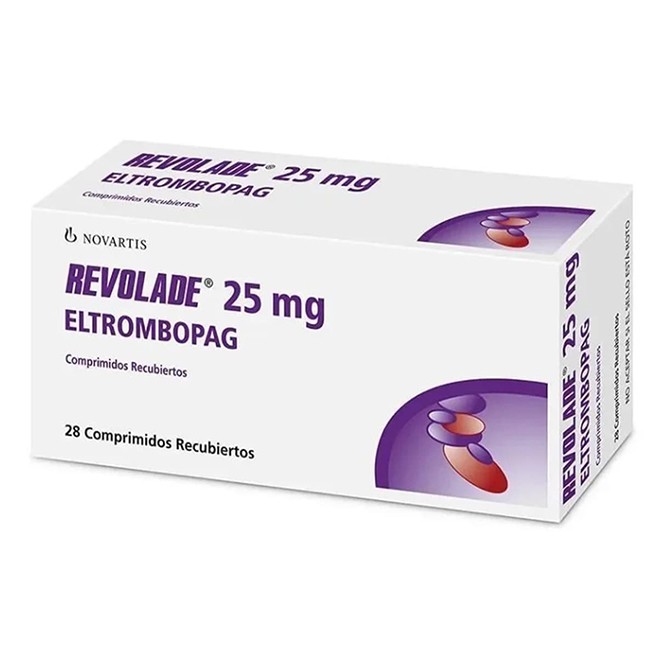
Eltrombopag is a prescription medication. Proper use directly impacts its efficacy and safety.
1. Dosage and Administration
1.1 Immune Thrombocytopenia (ITP)
(1) Adults and children aged 6 years and older:
Initial dose: 50 mg orally once daily.
Dose reduction: 25 mg once daily for patients of East/Southeast Asian ancestry or those with hepatic impairment.
Maximum dose: 75 mg per day.
(2) Children aged 1–5 years:
Initial dose: 25 mg orally once daily.
(3) Dose adjustment principles:
Use the lowest effective dose to maintain platelet counts ≥ 50 × 10⁹/L (not exceeding 400 × 10⁹/L).
If platelets remain < 50 × 10⁹/L after 2 weeks of treatment: increase by 25 mg/day.
If platelets are 200–400 × 10⁹/L: decrease by 25 mg.
If platelets > 400 × 10⁹/L: temporarily suspend treatment. Monitor platelets twice weekly. Resume at a 25 mg reduced dose when platelets fall below 150 × 10⁹/L.
(4) Discontinuation criteria:
Discontinue if platelet counts remain insufficient to prevent clinically significant bleeding after 4 weeks at the maximum dose (75 mg/day).
1.2 Thrombocytopenia Associated with Chronic Hepatitis C
(1) Initial dose: 25 mg orally once daily.
Maximum dose: 100 mg per day.
(2) Dose adjustment:
Increase by 25 mg every 2 weeks until the target platelet count required to initiate antiviral therapy is achieved.
Monitor platelets weekly before starting antiviral therapy.
During antiviral therapy: monitor weekly, then monthly once stable.
1.3 Severe Aplastic Anemia (SAA)
(1) First-line treatment (treatment-naive patients):
Ages 12 years and older: 150 mg once daily for 6 months.
Ages 6–11 years: 75 mg once daily for 6 months.
Ages 2–5 years: 2.5 mg/kg once daily for 6 months.
(2) Dose reduction:
Halve the above doses for patients of East/Southeast Asian ancestry or those with hepatic impairment.
(3) Refractory SAA:
Initial dose: 50 mg once daily.
Increase by 50 mg every 2 weeks, maximum 150 mg/day.
Discontinue if no hematologic response within 16 weeks.
1.4 Administration Instructions
(1) Take on an empty stomach or with a low-calcium meal:
May be taken with meals containing ≤ 50 mg of calcium.
(2) Separate from products containing polyvalent cations:
Wait at least 2 hours before or 4 hours after taking eltrombopag to consume antacids, dairy products, or mineral supplements (containing iron, calcium, aluminum, magnesium, selenium, zinc).
(3) Tablets:
Swallow whole. Do not split, chew, crush, or mix with food or liquids.
(4) Oral suspension:
Prepare only with room-temperature water.
Administer immediately after preparation. Discard if not used within 30 minutes.
Do not use hot water.
2. Precautions
2.1 Liver Function Monitoring
(1) Test ALT, AST, and bilirubin:
Before treatment.
Every 2 weeks during dose titration.
Monthly once stable.
(2) Discontinuation for liver injury:
Discontinue if:
ALT elevates to > 3 × ULN and persists for ≥ 4 weeks, or
Elevations are accompanied by increased direct bilirubin or symptoms of liver injury.
2.2 Platelet Monitoring
(1) ITP patients:
Monitor CBC weekly during treatment until stable, then monthly.
Continue weekly monitoring for at least 4 weeks after stopping treatment.
2.3 Contraindication
Absolutely contraindicated in patients with myelodysplastic syndromes (MDS).
Clinical trials show eltrombopag increases the risk of death by 42% and progression to acute myeloid leukemia by 166% in MDS patients.
2.4 Dose Adjustment in Special Populations
(1) Hepatic impairment (ITP/SAA):
Reduce initial dose to 25 mg (or 12.5 mg).
Wait 3 weeks after dose adjustment before further increases.
(2) East/Southeast Asian ancestry (ITP/SAA):
Halve initial dose. No dose reduction required for chronic hepatitis C patients.
2.5 Significant Drug Interactions
(1) Statins:
Eltrombopag increases rosuvastatin AUC by 55% and Cmax by 103%. Reduce statin dose by half when co-administered.
(2) Cyclosporine:
May decrease eltrombopag plasma concentrations by 18–24%.
2.6 Laboratory Test Interference
(1) Eltrombopag is dark brown and may discolor blood specimens, interfering with bilirubin and creatinine assays.
(2) Inform the laboratory before testing.
3. Healthy Lifestyle Recommendations
3.1 Dietary Management
(1) Strict adherence to dosing schedule:
Avoid high-calcium foods (milk, yogurt, cheese, calcium-fortified juices), iron/calcium/magnesium/zinc supplements, and antacids 2–4 hours before and after dosing.
(2) Low-calcium meals allowed:
Meals with ≤ 50 mg calcium may be taken with the dose without affecting absorption.
3.2 Bleeding Risk Prevention
(1) Platelet levels may remain low during treatment and decline 1–2 weeks after stopping.
(2) Avoid high-risk activities (e.g., vigorous exercise, contact sports).
Use a soft-bristle toothbrush.
Avoid forceful nose-blowing.

Free Inquiry