info@seagull-health.com
SeagullHealth
语言:
search
new
Dosage and Administration & Recommended Dose of Benidipine Hydrochloride (Coniel)
561
Article source: Seagull Pharmacy
Dec 24, 2025

Benidipine Hydrochloride (Coniel) is a long-acting dihydropyridine calcium channel blocker, which is widely used clinically for the treatment of hypertension and angina pectoris. It inhibits calcium ion influx and dilates blood vessels, thereby lowering blood pressure and increasing myocardial blood supply.

Dosage and Administration & Recommended Dose of Benidipine Hydrochloride (Coniel)

Treatment of Hypertension

(1) For patients with hypertension (including renal parenchymal hypertension), the usual adult dose of Benidipine Hydrochloride is 2-4 mg once daily, to be taken orally after breakfast. The dose may be appropriately adjusted according to the patient's age and specific condition.

(2) If the therapeutic effect is unsatisfactory, the dose may be increased to 8 mg once daily under the guidance of a physician. For patients with severe hypertension, an initial dose of 4-8 mg once daily, also administered after breakfast, is generally recommended.

Treatment of Angina Pectoris

(1) For angina pectoris, the usual adult dose is 4 mg twice daily, to be taken orally after breakfast and dinner respectively. The dose should also be appropriately adjusted based on individual conditions and therapeutic responses.

(2) It should be noted that this product is a prescription drug and must be administered in strict accordance with the doctor's advice. The dose or frequency of administration shall not be increased, decreased or altered without medical guidance.

Dose Adjustment of Benidipine Hydrochloride (Coniel)

Efficacy-based Dose Adjustment

(1) Initial treatment should usually start with a low dose.

(2) Blood pressure or the frequency of angina pectoris attacks shall be monitored regularly after medication.

(3) If blood pressure control is not achieved or the improvement of angina pectoris symptoms is insignificant, the dose may be considered for gradual escalation after evaluation by a physician.

(4) The maximum dose for hypertensive patients can be increased to 8 mg per day.

Safety-based Dose Adjustment

(1) Close observation is required for adverse reactions during medication, such as excessive hypotension, headache, flushing, edema and elevated liver enzymes.

(2) In case of intolerable side effects, dose reduction or temporary suspension of medication should be considered, and a physician shall be consulted promptly.

Dose Adjustment for Drug Interactions

(1) Increased plasma concentration and enhanced antihypertensive effect: Co-administration with itraconazole, cimetidine, or consumption of grapefruit juice may lead to excessive hypotension. In such cases, close blood pressure monitoring is necessary, and the dose of this product should be reduced if needed.

(2) Decreased plasma concentration and diminished efficacy: Co-administration with rifampicin may result in reduced antihypertensive effect. Blood pressure should be monitored and dose adjustment shall be considered accordingly.

(3) Effect on digoxin concentration: Concomitant use may increase the plasma concentration of digoxin and raise the risk of digoxin toxicity. Plasma digoxin concentration and cardiac function should be monitored, and the doses of digoxin or this product shall be adjusted correspondingly.

Administration in Special Populations for Benidipine Hydrochloride (Coniel)

Geriatric Patients

(1) Geriatric patients have impaired physiological functions and are more sensitive to the drug, with an increased risk of adverse reactions such as hypotension.

(2) A lower initial dose (e.g., 2 mg per day) is recommended, with slow dose titration, and enhanced blood pressure monitoring after medication is required.

Pregnant and Lactating Women

(1) Pregnant women: This product is contraindicated in pregnant women or women of childbearing potential. Animal studies have shown that the drug can cross the placenta and pose potential risks to the fetus.

(2) Lactating women: The drug is excreted in breast milk and may pose potential risks to infants. Lactating women should avoid using this product; if administration is necessary, breastfeeding must be discontinued.


Note: For internal discussion among medical personnel only. For specific medication, please consult the attending physician. Drug information may change over time. For the latest information, we recommend adding a medical consultant or consulting for free online.
Recommended Articles
Side Effects of Enasidenib
Enasidenib is a targeted therapy for adult patients with relapsed or refractory acute myeloid leukemia (AML) harboring a specific genetic mutation (IDH2 mutation).Side Effects of EnasidenibCommon Side...
What are the Precautions for Enasidenib Administration?
Enasidenib is an isocitrate dehydrogenase-2 (IDH2) inhibitor that offers a targeted treatment option for patients with relapsed or refractory acute myeloid leukemia (AML).What are the Precautions for ...
Dosage and Administration, Recommended Dose of Enasidenib
As an isocitrate dehydrogenase-2 (IDH2) inhibitor, Enasidenib offers a targeted treatment option for patients with relapsed or refractory acute myeloid leukemia (AML). Its unique mechanism of action t...
What Are the Indications for Enasidenib?
Enasidenib is an oral isocitrate dehydrogenase-2 (IDH2) inhibitor, which was first approved for marketing in the United States in 2017 for the treatment of specific types of acute myeloid leukemia (AM...
What are the Indications of Benidipine Hydrochloride (Coniel)?
Benidipine Hydrochloride (Coniel) is a long-acting calcium channel blocker belonging to the dihydropyridine class of antihypertensive drugs, and is widely indicated for the treatment of hypertension a...
Where to Purchase Benidipine Hydrochloride (Coniel)
Benidipine Hydrochloride (Coniel) is a prescription drug commonly used for the treatment of hypertension and angina pectoris, and it belongs to the category of long-acting calcium antagonists. As a pr...
Adverse Reactions of Azelnidipine (Calblock)
Azelnidipine (Calblock) is a calcium channel blocker indicated for the treatment of hypertension, with azelnidipine as its main active ingredient. As a prescription drug, its administration must be in...
What are the precautions for the administration of Azelnidipine (Calblock)?
Azelnidipine (Calblock) is a commonly used calcium channel blocker, which is mainly indicated for the treatment of hypertension. It exerts antihypertensive effects by dilating blood vessels and reduci...
Related Articles
Contraindications and Special Populations of Brensocatib Tablets
The prescribing information for Brixocatib tablets indicates that there are no absolute contraindications, but careful assessment of risks and benefits is still required in patients with special physi...
Dosage and Administration of Isatuximab Injection (Sarclisa)
Sarclisa must be administered under the supervision of a healthcare professional, and the administration site must be equipped with immediately available emergency equipment and medical support to man...
Indications and Dosage of Tepotinib
Tepotinib is an oral MET tyrosine kinase inhibitor indicated for the treatment of non-small cell lung cancer harboring MET exon 14 skipping mutations.I. Indications and Patient Selection1. Applicable ...
Dosage and Administration of Zidesamtinib
Before the first administration of Ziditnib, the following baseline assessments must be completed: serum creatine phosphokinase level, electrocardiogram, blood electrolytes (potassium, magnesium, calc...
Indications and Dosage and Administration of Ripretinib
Ripretinib is a kinase inhibitor specifically indicated for adult patients with advanced gastrointestinal stromal tumors who have previously received three or more kinase inhibitors.I. Indications and...
Contraindications and Medication in Special Populations of Ripretinib
Ripretinib does not list any absolute contraindications in its prescribing information, but there are clear usage restrictions or risks for specific physiological states and populations.I. Clear Contr...
Adverse Reactions of Ripretinib
Unlike traditional inhibition that targets the active site of a single kinase, ripretinib modulates the kinase "switch" conformation to suppress aberrant kinase signaling of KIT and PDGFRA, ...
Contraindications and Medication in Special Populations of Etoricoxib
Etoricoxib is effective for pain relief, but due to its cardiovascular and gastrointestinal risks, there are clear contraindications for its use.I. Absolute contraindications: who must not use it1. Al...
New Drugs
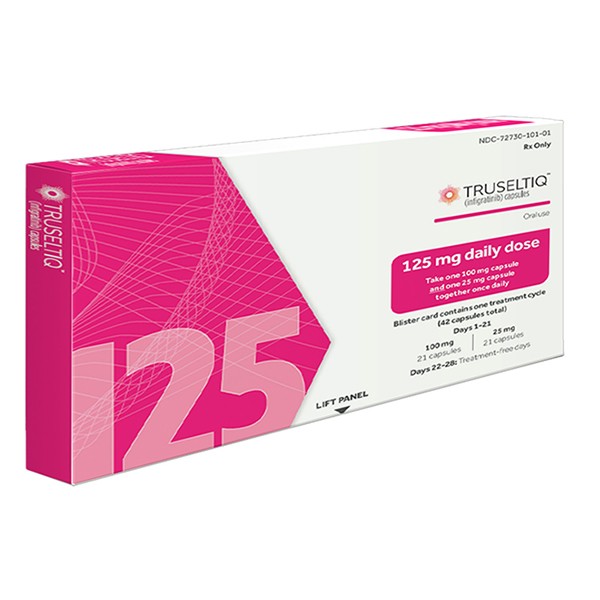
Infigratinib(Truseltiq)
Treatment of previously treated, unresectable locally advanced or metastatic...
Opicapone(Ongentys)
Opicapone(Ongentys)
Adjunctive treatment to levodopa/carbidopa for reducing "off" episodes in...
Deflazacort(Emflaza)
Treatment of Duchenne muscular dystrophy (DMD) in patients aged 2 years and...
Faricimab-svoa(Vabysmo)
Treatment of neovascular age-related macular degeneration, diabetic macular...
Counselling Service
Global Drug Search
Clinical Research Recruitment
Overseas Medical Treatment
Remote Consultations
Note: Our medical consultant will contact you as soon as possible. We promise to strictly protect your privacy.
Submit
Business
  • Core products
  • Antitumor drugs
  • General drug
  • Antiviral drugs
  • Biological agents
Contact Us 
  • haiousales@gmail.com
Welcome to consult
Seagull Pharmacy.,Ltd All rights reserved